
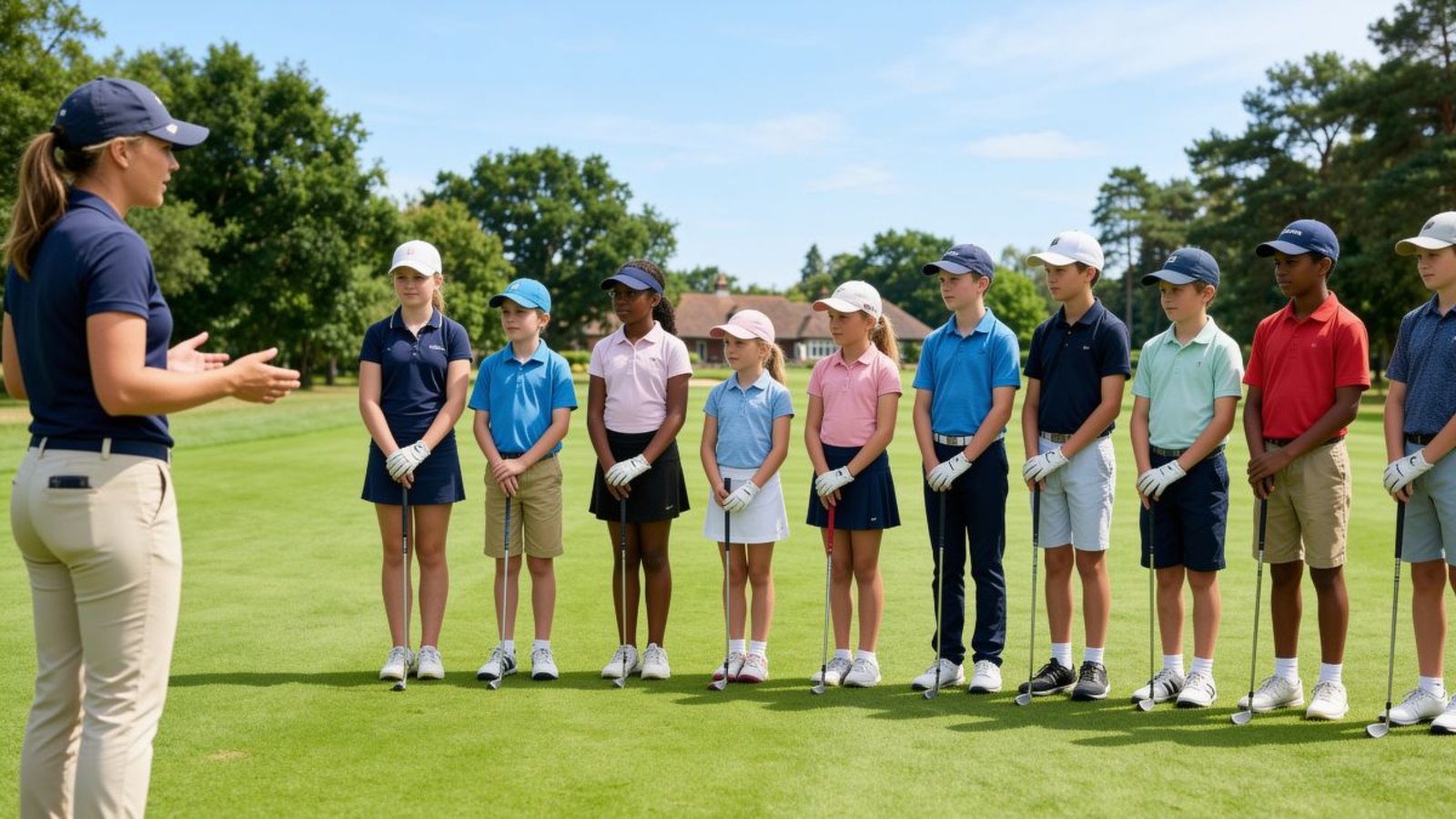

Junior golf camps have grown into something quite remarkable — the range of programs now available to families worldwide covers every age, every ability level, and every level of commitment from a curious five-year-old to a sixteen-year-old chasing a college roster spot. From half-day clinics at a local club to week-long residential programs at nationally recognized academies, the question is no longer whether a camp exists for your junior. It is which one is the right fit.
My name is Al, and I came to the junior golf world the same way a lot of parents do — through a child who decided golf was their thing before I fully understood what that would mean for our family. I have spent years researching programs, comparing formats, and comparing notes with other golf parents about what actually made a difference for their kids. I am not a certified coach or a former tour player — just a dad who is passionate about junior golf and who has done a lot of homework so you do not have to start from scratch. In this article I cover what separates a strong camp from a mediocre one, how to match the right format to your junior’s current stage of development, and the specific programs that consistently stand out at every skill level across North America, the UK, and internationally. There is more depth ahead than you will find in most places — keep reading.
⛳🏌️
US Kids Golf UL7 Stand Bag Set
I chose the US Kids Golf UL7 Stand Bag Set over comparable junior sets because every camp coordinator and junior instructor I have spoken with points to it when parents ask what their child should bring — it is the default recommendation across programs at every skill level. The single most compelling benefit is the height-based sizing system: instead of guessing by age, you measure your junior and get a set built for their actual swing arc, which produces better contact and faster improvement from the very first session.
- ✅ Height-based sizing from 39″ to 63″
- ✅ Driver, hybrid, irons, wedge, putter + stand bag
- ✅ Designed for beginners to intermediate players
- ✅ Ships internationally | Recommended by junior instructors worldwide
| Mid-range
👉 Shop US Kids Golf (opens in a new tab)What a Great Junior Golf Camp Actually Delivers
Evaluation and ability grouping set the tone for everything else: The first thing any credible junior golf camp should do is assess incoming players and group them by age and ability — not treat all nine-year-olds as interchangeable. A proper first-day evaluation allows instructors to form small, level-appropriate groups, which is the foundation of effective junior instruction. Players learn faster when they are working at the right challenge level, and they stay engaged when they are neither bored by material that is too easy nor frustrated by concepts they are not yet ready to absorb.
Instructor credentials determine the actual quality of coaching: A camp run by a well-known national brand is not automatically better instructed than a smaller regional program. What counts is whether the coaching staff are PGA-certified professionals (opens in a new tab) or hold recognized credentials from a body such as the Titleist Performance Institute (opens in a new tab), whether they have specific experience working with junior golfers rather than only adults, and what the realistic student-to-instructor ratio looks like in practice. TPI has established widely-used standards for assessing the physical and technical readiness of junior players, and programs that use TPI screening as part of their intake process tend to deliver more individually tailored instruction from the first session.
Curriculum breadth separates good camps from genuinely outstanding ones: Full-swing instruction is a starting point, not a complete program. The camps that produce lasting improvement also dedicate real time to the short game — chipping, pitching, bunker play, and putting — alongside basic course management, decision-making under pressure, rules and etiquette, and at more advanced levels, mental-performance strategies and physical conditioning (opens in a new tab). A junior who leaves camp understanding when to lay up, how to manage a wind change, and why club selection matters has received thorough, well-rounded instruction rather than a swing adjustment that dissolves within two weeks.
Coach-to-player ratios determine how much individual attention your junior actually receives: Most high-quality programs operate at ratios between 4:1 and 8:1 students per coach. GOLFZON Leadbetter, for example, runs an 8:1 student-to-coach ratio across its junior camp programs — a figure that ensures real individual contact for each player rather than a setup where instruction is effectively delivered to a crowd. When comparing camps, ask about the maximum group size, not just the headline ratio, because some programs average a respectable number while allowing individual groups to run considerably larger.
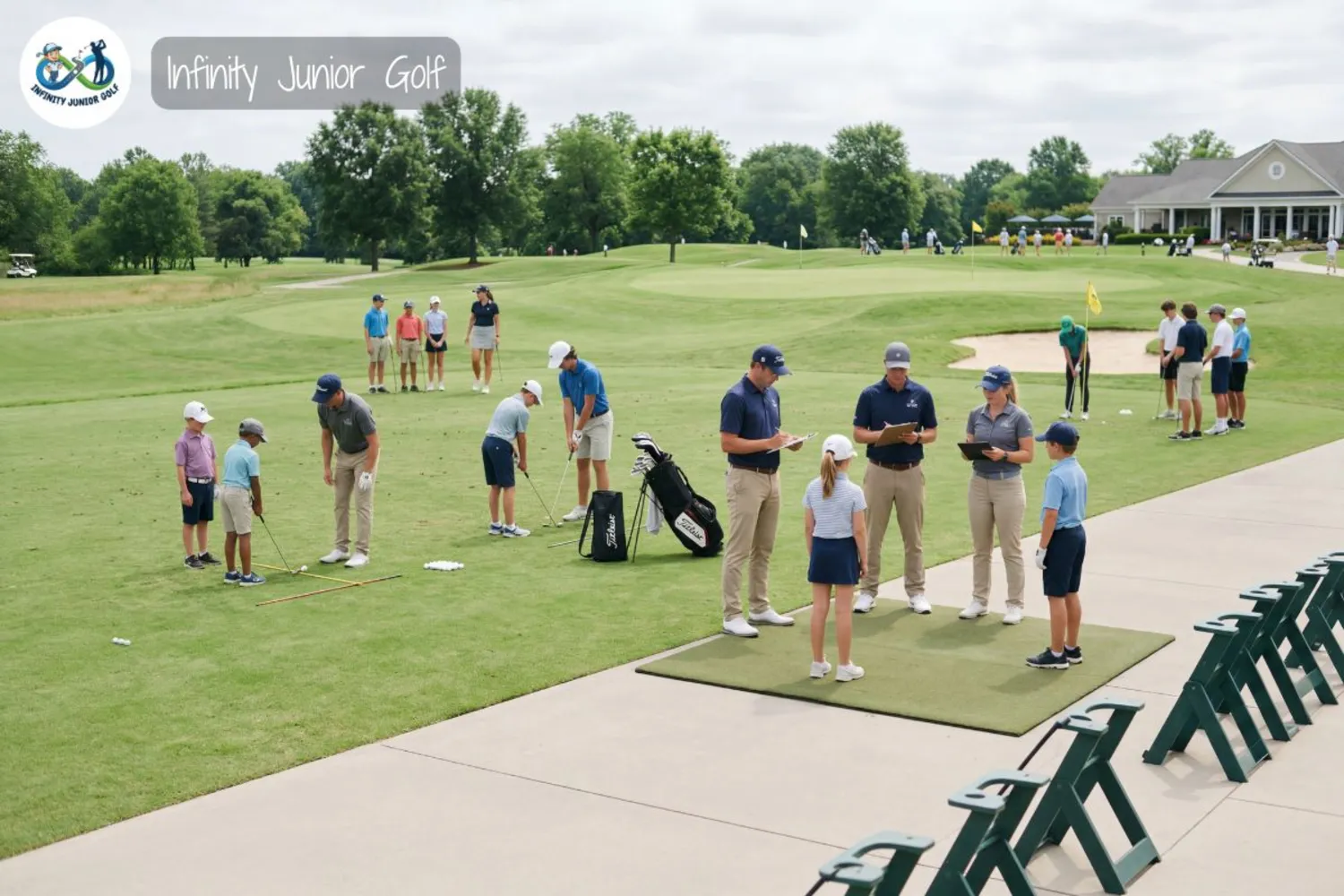
On-course time is where the real learning happens: Range work builds mechanics; on-course play builds golfers. A program that spends the entire week on the practice tee is missing the most important teaching environment the game has to offer. Look for camps that include supervised on-course sessions even for beginners — even new players benefit enormously from playing short holes in a managed, low-pressure setting. Understanding how to read a green, manage wind, and think through a short-game decision from a real pin position is only possible on an actual course. Before camp, it also pays to have the right clubs in hand — our junior club reviews (opens in a new tab) can help you identify which set will serve your junior best at their current stage.
Those five factors give you a reliable framework for evaluating any program. They do not, however, tell you which type of camp to choose — and the right format depends entirely on your junior’s age, their current level, and how seriously they want to pursue the game. That comes next.
Understanding Junior Golf Camp Formats
Community day camps are where most juniors start: A half- or full-day program at a local club or driving range is the lowest-pressure introduction to structured golf instruction. These programs typically run Monday through Friday during school holidays, focus on fundamentals — grip, stance, the basic swing, chipping, and putting — and include short on-course play so juniors experience the real game rather than spending the entire week at a range. Most accept players from age five or six, supply loaner clubs so families do not need to invest in equipment before their child has decided to commit, and keep the atmosphere social and game-oriented. The First Tee (opens in a new tab), which runs community junior golf programs across the United States and in international markets, operates in this spirit: making golf structured, accessible, and character-based for beginners of every background.
Multi-day residential camps are where casual interest becomes genuine commitment: A five-day overnight program is a different experience from a day camp in ways that go beyond the extra hours of coaching. Players live on or near the facility, eat and socialize together, and absorb instruction across every part of the game in a sustained, immersive way that no day format can replicate. The social element matters enormously — juniors form friendships with peers who take the game seriously, and the peer motivation that results tends to push individual improvement in a way that disappears when a junior returns home each evening to unrelated routines. Most residential programs run in summer and sometimes winter, accepting a range of abilities and grouping players by level within each session. Before your junior’s first residential week, our tournament packing guide (opens in a new tab) is worth reading — the packing lists for both occasions overlap considerably.
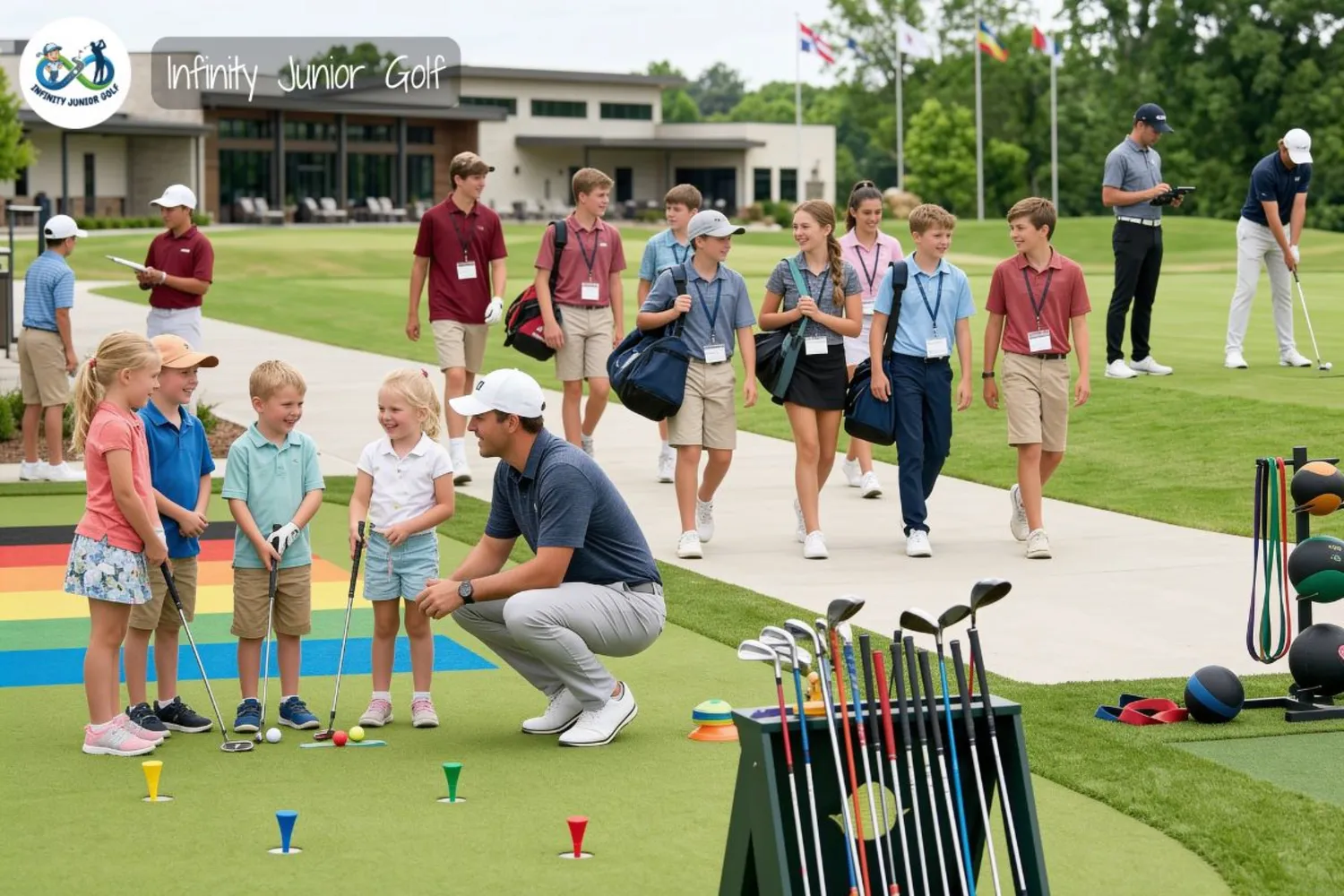
Elite academies are built for juniors with a long-term plan: A full-immersion academy — particularly a year-round residential one — exists for one type of junior: the player who wants to compete seriously, pursue college golf, or reach the highest level possible with intensive, sustained support. These programs combine small-group technical coaching, performance technology such as launch monitors and video analysis, fitness and recovery programming, mental-skills coaching, and in some cases an integrated academic curriculum. They carry significantly higher costs and time commitments than day or residential camps, and they require a genuine level of dedication from both the junior and the family before enrollment makes practical sense.
Golf-plus-language programs serve a growing international audience: A number of programs in the United Kingdom and Europe now pair daily golf instruction with English-language classes, making them a valuable option for international families wanting their junior to develop two skills simultaneously. These programs are typically residential, run one to four weeks during summer, and attract players from dozens of countries — creating an experience that stands apart from purely domestic programs through its cross-cultural character.
Choosing the right format comes down to three honest questions: How committed is your junior to golf right now? How much time and budget can the family realistically commit? And what does the junior themselves actually want? A reluctant twelve-year-old sent to an elite residential academy rarely thrives. Once you have honest answers to all three, the programs in the next section cover exactly that range.
The Best Junior Golf Camps by Skill Level
For beginners — make the first experience count: The programs that handle complete beginners best prioritize fun, keep pressure low, and ensure every child leaves feeling capable rather than confused. PGA Junior Golf Camps (opens in a new tab) built their “Wee Ones” track specifically for this: a playful, game-based introduction for ages five to seven that teaches basic grip, stance, and swing fundamentals while keeping the atmosphere light and social. Nike Junior Golf Camps (opens in a new tab), operated by US Sports Camps across more than thirty states in the United States, offer day-camp formats for complete beginners from age eight, with first-day evaluations that ensure players are grouped by ability rather than placed in an undifferentiated general session.
Local club camps — run through PGA-affiliated programs at community facilities — are often the most sensible entry point for very young players: affordable, close to home, and taught by local professionals who know the course. For families looking to extend their junior’s exposure beyond a single camp week, Youth on Course operates a network of golf facilities where junior members aged six to eighteen can play rounds for five dollars or less — a worthwhile on-course complement to any beginner camp program. If your child does not yet have their own clubs, our guide to first-timer club sets (opens in a new tab) is worth checking before registration — arriving with properly fitted equipment makes a measurable difference in how quickly beginners absorb instruction.
Junior instructors are consistent on one point: beginners make better contact faster when using clubs matched to their height and swing arc rather than a cut-down adult set or a loaner that does not fit.
🏌️
I recommend the US Kids Golf UL7 Stand Bag Set specifically for beginners heading to camp because the height-based sizing means the clubs work with a child’s natural swing rather than against it — instructors spend less time correcting compensations caused by ill-fitting equipment and more time teaching the actual game.
- ✅ Height-based sizing | Complete 7-club set with stand bag
- ✅ Multiple sizes from 39″ to 63″
- ✅ Ships internationally
For intermediate players — depth of instruction and real competitive exposure: A junior who already understands basic swing mechanics and wants to improve meaningfully needs a program that moves beyond technique and into the strategic parts of the game. Nike full-day camps progress intermediate players into shot selection, course management, and short-game development. GOLFZON Leadbetter camps (opens in a new tab), operating out of Orlando, Florida, and Crystal Springs, New Jersey, run a multi-day curriculum at an 8:1 coach-to-student ratio, with a data-analysis option that gives intermediate and advancing players concrete metrics on ball flight, club path, and impact. IMG Academy’s summer camp in Bradenton, Florida, accommodates ages eight to eighteen with customizable programming that scales from improver through to near-elite level.
For competitive and college-bound juniors — a framework, not just instruction: Advanced juniors competing in regional or national events, or actively planning for college golf, need more than good coaching — they need a documented development pathway. The International Junior Golf Academy (opens in a new tab) (IJGA), now operating from Howey-in-the-Hills in central Florida near Orlando, is one of the oldest independent junior golf academies in the United States, combining a year-round college-preparatory boarding program with week-long summer camps on a first-class facility featuring a sixteen-acre training site and eleven holes. IJGA has maintained a near-100 percent college acceptance rate throughout its history, and its College Pathway program offers structured support for tournament preparation and college recruitment from a single integrated curriculum. For technology-integrated preparation, GOLFZON Leadbetter’s elite-camp track and IMG Academy’s advanced program both incorporate launch monitor data and video analysis at a level more typically associated with professional instruction. It is also worth mapping the tournaments your junior could target after a development camp — our overview of US junior tournaments (opens in a new tab) covers the main competitive pathways by age and ability level.
For families outside North America — strong options on the global stage: Junior golf camp options outside the United States have grown considerably. In the United Kingdom, Nike Golf Camps UK, operated by Euro Sports Camps, runs residential programs at prestigious English venues for ages ten to seventeen, pairing PGA instruction with cultural excursions that make the experience attractive for international families. Exsportise, based near London, combines golf coaching with an English-language immersion environment and draws players from more than eighty countries — a genuinely global program in the fullest sense. Scotland’s St Andrews region hosts residential programs including those run through Mypro Junior Golf Camps, connecting juniors with golf’s historical heartland. For families comparing options across multiple countries from a single starting point, Ertheo operates as a sports-and-education agency placing students in golf camps and academies across Spain, the UK, the U.S., and Ireland.
With ten programs spanning four regions and every skill level from complete beginner to college-bound competitor, a side-by-side view makes it easier to build a shortlist quickly. The table below places each camp against the same criteria — region, the skill levels it serves, age range, format, and estimated cost — so you can scan across the full picture without reading back through every paragraph above.
| Camp | Region | Skill Level | Ages | Format | Key Feature | Est. Cost |
|---|---|---|---|---|---|---|
| PGA Junior Golf Camps (opens in a new tab) | North America | Beginner · Intermediate · Advanced | 5–16 | Day | Wee Ones track for ages 5–7; PGA-pro instructors; tiered ability grouping | ~$100–$700 / week |
| Nike Junior Golf Camps (opens in a new tab) | North America | Beginner · Intermediate · Advanced | 8–18 | Day & Residential | Largest US network — 30+ states; first-day ability evaluation; overnight option available | ~$69–$700 / week |
| The First Tee (opens in a new tab) | North America | Beginner | 5–18 | Community | Character-based curriculum; chapters across the US and some international markets | Free / low cost |
| GOLFZON Leadbetter (opens in a new tab) | North America | Intermediate · Advanced | 8–18 | Multi-day | 8:1 coach ratio; launch monitor data analysis add-on; Orlando FL & Crystal Springs NJ | ~$1,000–$3,000+ / week |
| IMG Academy (opens in a new tab) | North America | Intermediate · Advanced | 8–18 | 3-day to multi-week | Customizable programming scaling improver to elite; dedicated girls’ camp track; Bradenton FL | ~$1,500–$3,000+ / week |
| IJGA (opens in a new tab) | North America | Advanced | 10–18 | Camp & Boarding | Near-100% college placement; College Pathway program; Howey-in-the-Hills FL | ~$2,000+ camp; boarding significantly higher |
| Nike Golf Camps UK (opens in a new tab) | UK & Europe | Intermediate · Advanced | 10–17 | Residential | Prestigious English venues; PGA instruction; cultural excursions included; novice to experienced players — not for complete beginners | Contact provider |
| Exsportise (opens in a new tab) | UK & Europe | Beginner · Intermediate · Advanced | 10–17 | Residential | Golf + English immersion; multi-ability program for all levels; 80+ nationalities annually; near London | Contact provider |
| Mypro Junior Golf Camps | UK & Europe | Beginner · Intermediate · Advanced | Teens | Residential | St Andrews, Scotland — golf’s historic heartland; all skill levels welcome | Contact provider |
| Ertheo (opens in a new tab) | International | Beginner · Intermediate · Advanced | 8–18 | Agency / Broker | Places students in camps across Spain, UK, US, and Ireland; one contact for international comparisons | Varies by program |
Cost estimates are indicative as of 2026. Always confirm current pricing directly with each provider before booking, as fees change each season.
Finding the right program is half the work. How your junior arrives at camp — their equipment, their physical readiness, their mindset — shapes everything they take away from the experience, and that is what the next section is entirely about.
Brands and Tools That Help Juniors Thrive — Our Recommendations
Equipping a junior properly for camp — and for the practice that continues after it — does not require spending a fortune, but it does require knowing where to shop. The retailers below are selected because they sell what junior camp-goers actually need: properly sized club sets, bags, training aids, footwear, and accessories. Each operates a verifiable affiliate program and serves at least a multi-regional market.
Our Retailer Recommendations
US Kids Golf
The height-based sizing system US Kids Golf uses is the reason junior camp instructors point to their sets before anything else — it gives children clubs built for their actual swing arc, producing better contact faster and making a beginning session at camp far less frustrating. I recommend US Kids Golf to every new golf parent before any other brand, because the difference between correctly sized and incorrectly sized junior clubs is not subtle. Their UL7 Stand Bag Set (opens in a new tab) is available through Worldwide Golf Shops, which carries the full range across all size tiers and ships internationally.
GlobalGolf
GlobalGolf carries a dedicated junior section offering new and certified pre-owned clubs from US Kids Golf and other leading junior brands, which makes it a smart option for families who want quality equipment without paying full retail for a set their junior will outgrow in eighteen months. I appreciate the pre-owned category specifically: it lets you buy a well-maintained set at a sensible price and trade up as your child grows into the next size. Their UL7-57 7-Club Set (opens in a new tab) is a particularly popular size for players in the 9- to 12-year-old range, and the site ships internationally.
American Golf
For families in the UK, Ireland, and continental Europe, American Golf is the largest specialist golf retailer in the region, operating more than one hundred stores alongside a comprehensive online shop covering junior clubs, shoes, bags, and apparel. If I were based in the UK and preparing a junior for camp, American Golf would be my first call — the breadth of their junior product range and the availability of in-store staff make them the most straightforward option for European families. Their junior package sets (opens in a new tab) cover every age group from young beginners to teen-level players. Ships within the UK and Europe.
Golf Galaxy
Golf Galaxy is one of the largest specialty golf retailers in North America, with an extensive junior section covering complete sets, individual clubs, footwear, apparel, and accessories from all major brands. What I value about Golf Galaxy specifically is their in-store club-fitting service available at many locations — walking in and getting a junior physically measured before buying a camp set is meaningfully better than ordering online and guessing. Their UL7 54 stand set (opens in a new tab) for the 54″ to 57″ height range is one of the most popular junior sets in the store. Primarily serves North America.
InTheHoleGolf
InTheHoleGolf is useful specifically because they stock both junior club sets and junior-focused training aids — which means they serve not just the pre-camp equipment need but the post-camp follow-up practice that turns a single camp week into lasting improvement. I include them here because training aids are consistently underused by junior golfers, and the right tool makes home practice significantly more structured and effective. Their junior golf clubs (opens in a new tab) section covers options across multiple age ranges. Ships within North America.
2nd Swing Golf
2nd Swing Golf specializes in new and pre-owned clubs, and their pre-owned inventory is one of the strongest arguments for shopping there when outfitting a junior for camp: juniors grow quickly, and paying full retail for a set that will be too small in a year is difficult to justify when certified pre-owned alternatives exist in excellent condition. For families who want their junior properly equipped without a large upfront cost, 2nd Swing is the first place I would look. Their junior complete sets (opens in a new tab) page covers multiple brands and sizes. Ships within North America.
Gear is one side of camp preparation. The other — physical readiness, mental preparation, and knowing exactly what to pack — is what the next section is about.
How to Prepare Your Junior for Camp
Get the equipment right before the first day: The most common preparation mistake is arriving at camp with clubs that do not fit. A set that is too long, too heavy, or too stiff causes a junior to build compensations into their swing that instructors must then spend time correcting — which wastes camp hours that could be spent on more advanced material. Measuring your junior before camp and ensuring their set matches their current height is the single most impactful step a parent can take in advance. If buying a new set is not feasible, a certified pre-owned set from a reputable specialist is far better than modifying an adult set, and the cost saving can be significant when the junior is still growing quickly.
Build some basic physical readiness in the weeks before camp: Junior golf over multiple consecutive days is more demanding than it appears, particularly for players who have not been physically active. A junior who arrives at a five-day residential camp and is fatigued by day three absorbs less coaching in the back half of the week — exactly when instructors often introduce more advanced concepts. The weeks before camp are a good time to start working on hip flexibility, shoulder mobility, and basic trunk stability, which underpin every part of the golf swing. Our article on stretches for golfers (opens in a new tab) covers exactly the movements that matter most at this stage. Any specific exercise program for a junior should be guided by a qualified youth fitness professional or the junior’s GP, with a parent or qualified adult supervising physical conditioning work. The suggestions here are general starting points, not medical advice.
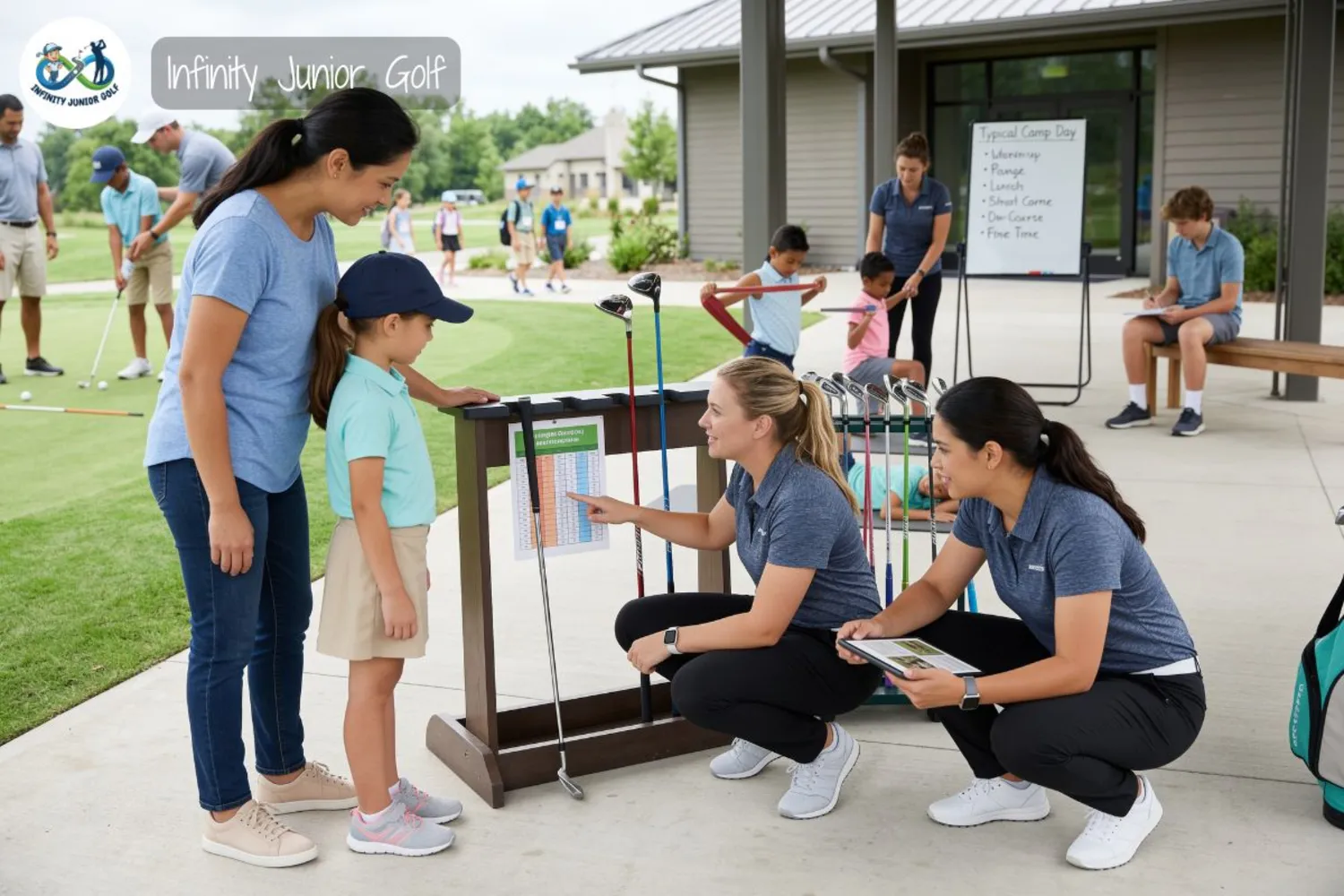
Establish a few fundamentals before you arrive, not your whole technique: The best pre-camp preparation is not intensive swing coaching. It is getting comfortable with a club in hand — understanding basic grip and setup — so that when a camp instructor addresses those elements, they feel familiar rather than entirely foreign. A junior who has hit balls before camp, even informally, typically absorbs formal instruction faster than one for whom grip pressure and ball position are completely new concepts. Two or three sessions with a local PGA-affiliated teaching professional in the weeks before camp can establish those basics efficiently, without grooving patterns that a camp instructor would need to undo. Fitting those sessions around school and rest takes less juggling than most parents expect — our guide to building a balanced training schedule (opens in a new tab) walks through exactly how to structure it.
Prepare the mental side as carefully as the physical: First-time residential campers sometimes arrive anxious about spending nights away from home in an unfamiliar environment, and that anxiety limits the mental bandwidth available for absorbing golf coaching. Talking through what a typical camp day looks like — the morning schedule, how groupings work, what mealtimes and free time involve — reduces uncertainty and helps your junior arrive ready to focus on the game. For older competitive juniors heading to elite programs, a different kind of mental preparation applies: setting one or two specific, realistic camp goals (opens in a new tab) for the week — whether a technical focus, a short-game target, or a score they want to achieve on the on-course days. Juniors who arrive with clear intentions tend to leave with a clearer sense of what actually changed in their game.
Pack thoughtfully and confirm the camp’s equipment policy: Most residential programs publish a packing list — follow it closely and check any equipment restrictions before arrival. The practical essentials beyond personal items: properly fitted clubs and a lightweight bag (our junior bag guide (opens in a new tab) covers the best options for a five-day camp week); several dozen golf balls, since camps use them at a rate that surprises most parents; golf shoes appropriate for the course conditions; a hat and adequate sun protection; and a water bottle they will actually use. Some programs ask juniors not to bring personal launch monitors or GPS devices at beginner and intermediate levels — confirm the policy before packing.
Good preparation turns a good camp week into an exceptional one. With the right equipment, some physical groundwork, and a clear picture of what to expect, your junior can focus entirely on the coaching from the very first session.
Our Practical Tips For You
These ten tips distill the research and experience behind this article into a quick-reference format — actionable before, during, or after camp.
| Tip | How to Implement | How It Helps |
|---|---|---|
| Measure height before buying clubs | Use a junior club sizing chart — US Kids Golf and most major retailers publish one — to determine the correct size for your child’s current height before purchasing anything. | Properly fitted clubs produce better contact faster, which makes camp instruction more effective from the very first session. |
| Confirm first-day ability grouping | Before registering, ask the camp how they assess and group players, and specifically whether that evaluation happens before formal instruction begins. | Level-appropriate groups ensure your junior is challenged at the right stage, rather than bored or overwhelmed by the wrong material. |
| Read multiple recent reviews | Search across several platforms rather than relying only on the camp’s own website. Look specifically for comments on coach-to-player ratios and how much on-course time is included. | Filters out marketing language and provides a more accurate picture of what the day-to-day experience actually looks like. |
| Ask about loaner equipment upfront | Call or email the camp to confirm whether they supply clubs for juniors who do not yet own a set before you purchase anything. | Avoids a significant equipment investment before your child is certain they want to continue playing. |
| Bring far more golf balls than you think | Calculate one to two dozen per full practice day, then add extra beyond that. | Juniors hit far more balls per session than most parents anticipate, and running short disrupts the flow of a coaching session. |
| Set one focus per session | Before each morning, ask your junior to name one specific thing they want to work on that day. | Specific daily intentions keep concentration sharp and give the week a sense of measurable progress rather than a general blur of instruction. |
| Request written instructor notes | Ask the coaching team for a written summary at the end of camp. If none is offered, write one with your junior immediately after the final session while the details are still fresh. | A written record converts the week’s coaching into a long-term reference rather than a collection of impressions that fade within a month. |
| Book early for high-demand programs | Nike Junior Golf Camps and PGA Junior Golf Camps fill quickly in peak summer weeks — registration opens months in advance for many locations. | Secures your preferred location, date, and session format before availability closes out. |
| Arrange follow-up coaching before camp ends | While the instruction is still fresh, schedule a session with a local PGA-affiliated coach within two to three weeks of returning from camp. | Immediate reinforcement after camp consolidates new habits before they fade without regular practice. |
| Plan a two- or three-year progression | If your junior is committed to improving, map out a logical step-up: beginner day camp, then residential, then an elite-track program with relevant timing. | Each camp builds meaningfully on the last rather than repeating the same introductory material year after year. |
FAQs
Here are the questions parents ask most often when researching junior golf camps.
What age should my child start attending junior golf camps? Most community and day camp programs accept players from age five or six. PGA Junior Golf Camps’ Wee Ones track is specifically designed for ages five to seven. The more useful question is behavioral readiness rather than age: can your child follow simple group instructions and focus for thirty to sixty minutes at a stretch? If so, a beginner community camp is a reasonable starting point regardless of the precise age.
Do camps provide clubs, or does my junior need their own set? Most beginner and community day camps provide loaner clubs, so families do not need to purchase equipment before their child commits to the sport. Residential and elite programs typically expect juniors to arrive with their own properly fitted clubs. Always confirm the camp’s equipment policy directly before registering.
How much does a junior golf camp typically cost? Costs vary considerably by format and provider. Community day camps often start below USD 100 for a full week. Full-day programs at major national brands such as Nike Junior Golf Camps typically run USD 300 to USD 700 per week depending on location and format. Multi-day residential programs at established academies range from approximately USD 1,000 to USD 3,000 or more, and year-round boarding programs are significantly higher. Confirm current pricing directly with the camp, as fees change each season.
Are there junior golf camps specifically for girls? Yes. IMG Academy markets a dedicated girls’ golf camp alongside its general junior program. Nike Junior Golf Camps and PGA Junior Golf Camps run co-ed sessions where girls are fully included across all skill groups. The LPGA Girls Golf program, delivered through LPGA chapter affiliates, offers dedicated programming specifically for girls and is worth exploring for families who prefer a girls-focused environment.
Our Related Articles

The Do’s And Don’ts Of Coaching Your Kids In Golf
Getting your child into golf is one thing. Staying in the fairway as their coach, cheerleader, and occasional critic is another thing entirely. The way…
Read More (opens in a new tab)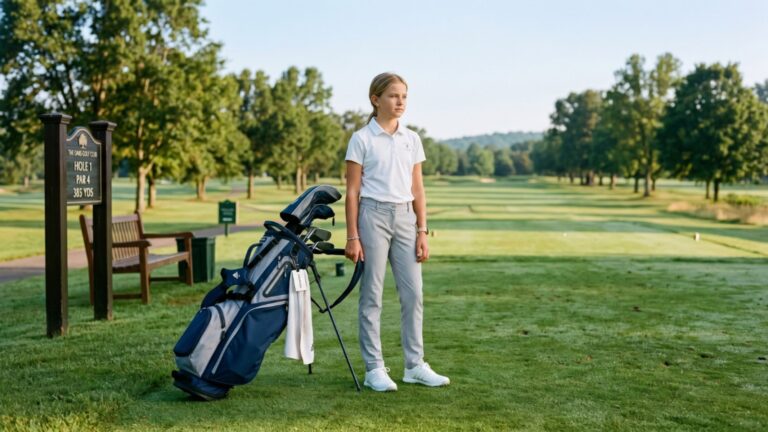
What To Pack For A Junior Golf Tournament
Showing up to a junior golf tournament well-prepared can make all the difference between a round filled with frustration and one brimming with confidence. When…
Read More (opens in a new tab)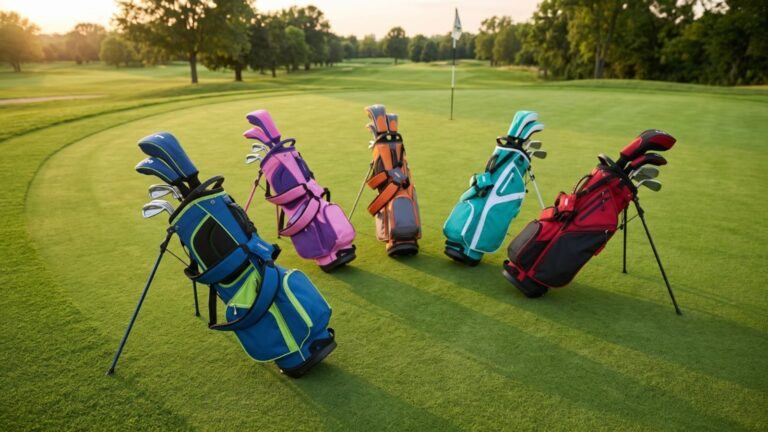
Top 5 Junior Golf Club Sets Reviewed
Picking a junior golf set feels simple until you actually stand in front of five options that all claim to be “the one.” Shaft flex,…
Read More (opens in a new tab)Conclusion
Junior golf camps are one of the most effective investments a family can make in a young player’s development — both as a golfer and as a person learning patience, focus, and resilience in a demanding game. The programs available today, at every level from a half-day beginner clinic to a year-round elite academy, are more varied and more professionally run than at any point before. The work is in the matching: finding the program that fits your junior where they actually are right now.
If your child is completely new to golf, start with a community day camp that makes the first experience enjoyable and low-pressure. If they already play and want to improve, look at multi-day residential options with genuine ability-based grouping and real on-course time. If they are competing and thinking seriously about college golf, research elite academies carefully — the curriculum, coach credentials, and documented development pathways matter considerably at that level.
There is no single best junior golf camp. There is the camp that is right for your junior at this point in their development. Has your junior attended a program that made a real difference to their game? Share what worked in the comments — I would love to hear about it.
