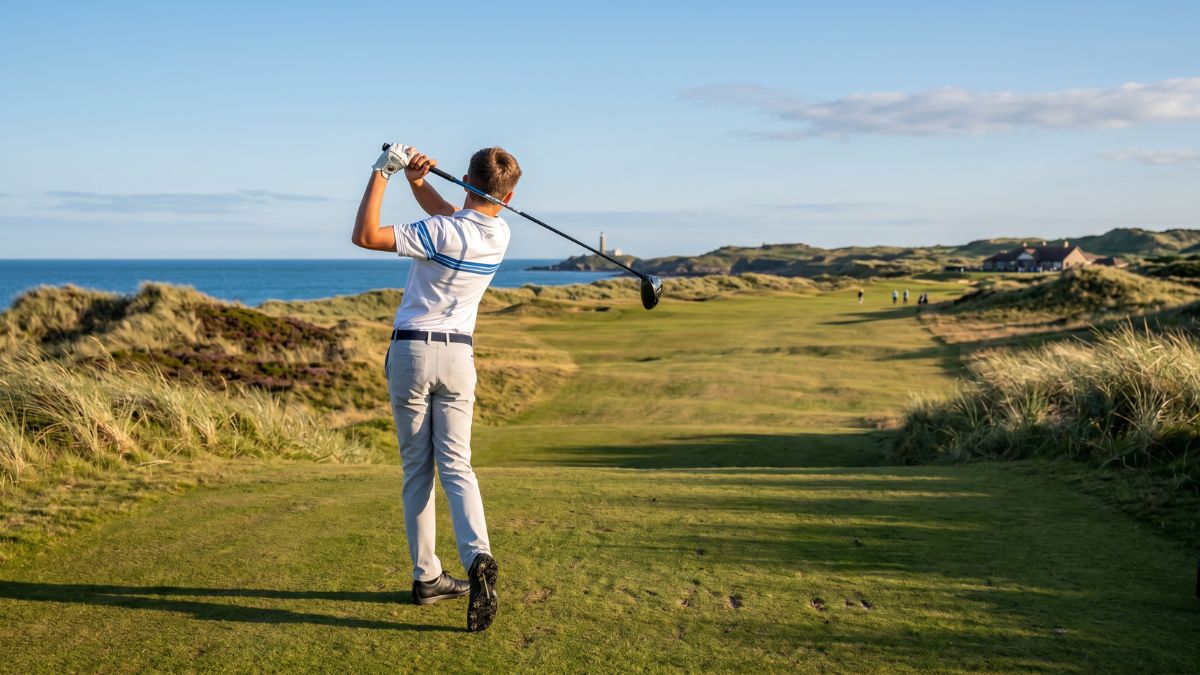

Golf is one of those sports where raw talent can only take you so far. What truly separates the junior golfers who hit the ball a long way — consistently, round after round — from those who seem to plateau is what’s happening underneath the swing: the core. A powerful, well-trained core is the engine behind every explosive, efficient golf swing, and the good news is that building one doesn’t require a professional gym or expensive equipment.
My name is Al, and like many of you, I’m not a touring pro or a certified athletic trainer — I’m just a regular person who fell deeply in love with junior golf. I’ve spent years watching young players develop their games and became fascinated by what fitness — especially core training — does for their swings. I started digging into the practice behind it, talking to coaches, reading everything I could find, and watching junior golfers transform when they added the right exercises to their routines. Welcome to this guide — I’m genuinely glad you’re here. If your junior golfer (or if you yourself are a young golfer) wants to hit the ball farther and more consistently, keep reading because this one could change everything.
⛳ Our Top Pick — Best Golf-Specific Swing Trainer for Core Power
GolfForever Swing Trainer
I chose the GolfForever Swing Trainer+ over other resistance-based golf training tools because it's the only system I've found that is specifically engineered around the exact mechanics of the golf swing — not adapted from general fitness equipment, but purpose-built for golfers. The single most compelling benefit is this: it trains core rotation, flexibility, and swing power simultaneously, in one compact system you can use anywhere.
- ✅ Three-in-one asymmetrical resistance training system — cord-driven bar, D3 swing weight heavy warmup club, and resistance band set with handles
- ✅ The Official Golf Fitness System of the PGA TOUR | Used by Scottie Scheffler, Zach Johnson & more
- ✅ Portable and home-friendly | Ships globally | Suitable for juniors and adults
| $199.99
👉 Shop GolfForever Swing Trainer+Why the Core Is the Engine of the Golf Swing
More than abs: When most people think about the core, they picture a six-pack. But in the context of golf — and especially the golf swing — the core refers to a much larger, more interconnected system of muscles. It includes the deep abdominals, the obliques, the lower back, and the glutes. Together, these muscles form the central pillar of the body, and every ounce of power in the golf swing flows directly through them.
The kinetic chain in action: The golf swing is a clear example of what coaches and sports scientists call the kinetic chain — a sequence of movements where energy is generated in the legs and ground, transferred through the hips and core, and finally released through the arms and clubhead. As the Golf Fitness Association of America explains, in the golf swing that action starts with the legs and moves up sequentially into the hips, trunk, arms, and finally the club — and when any link in that chain is weak, the power leaks out before it can do its job. A weak core means the shoulders, arms, and hands try to compensate, leading to an inconsistent swing that lacks real punch. Junior golfers with strong cores don’t just hit it farther — they hit it farther and straighter, because the whole swing stays in sequence.
Why junior golfers specifically benefit: Young athletes are in a golden window of physical development. This is the period when properly trained movement patterns become deeply ingrained habits. Junior golfers who begin core training early don’t just build a stronger swing — they build a smarter swing. The motor patterns, the body awareness, and the ability to feel and control rotation all develop rapidly in young athletes who train their core consistently.
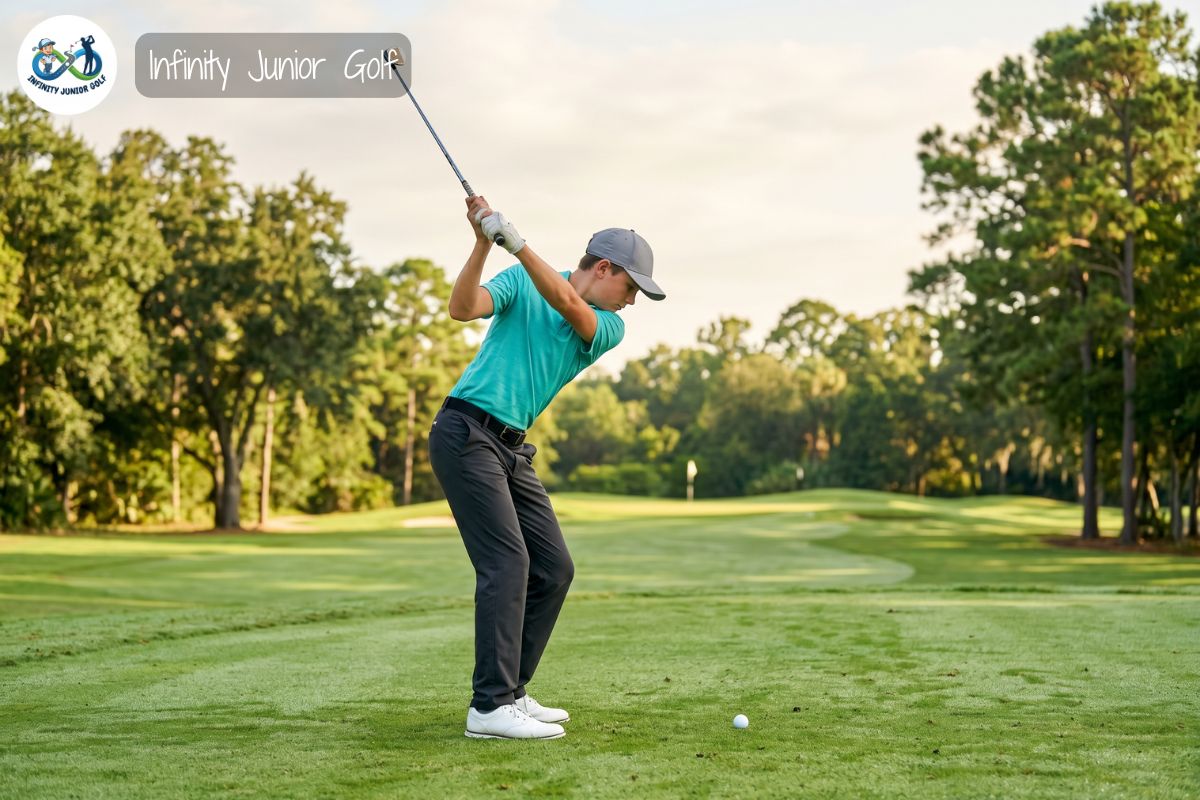
Understanding why the core matters is the first step — but what really makes the difference is knowing exactly which exercises to do. Let’s get into the specific movements that build the kind of core strength that transforms a junior golfer’s game.
The Best Core Exercises for Junior Golfers
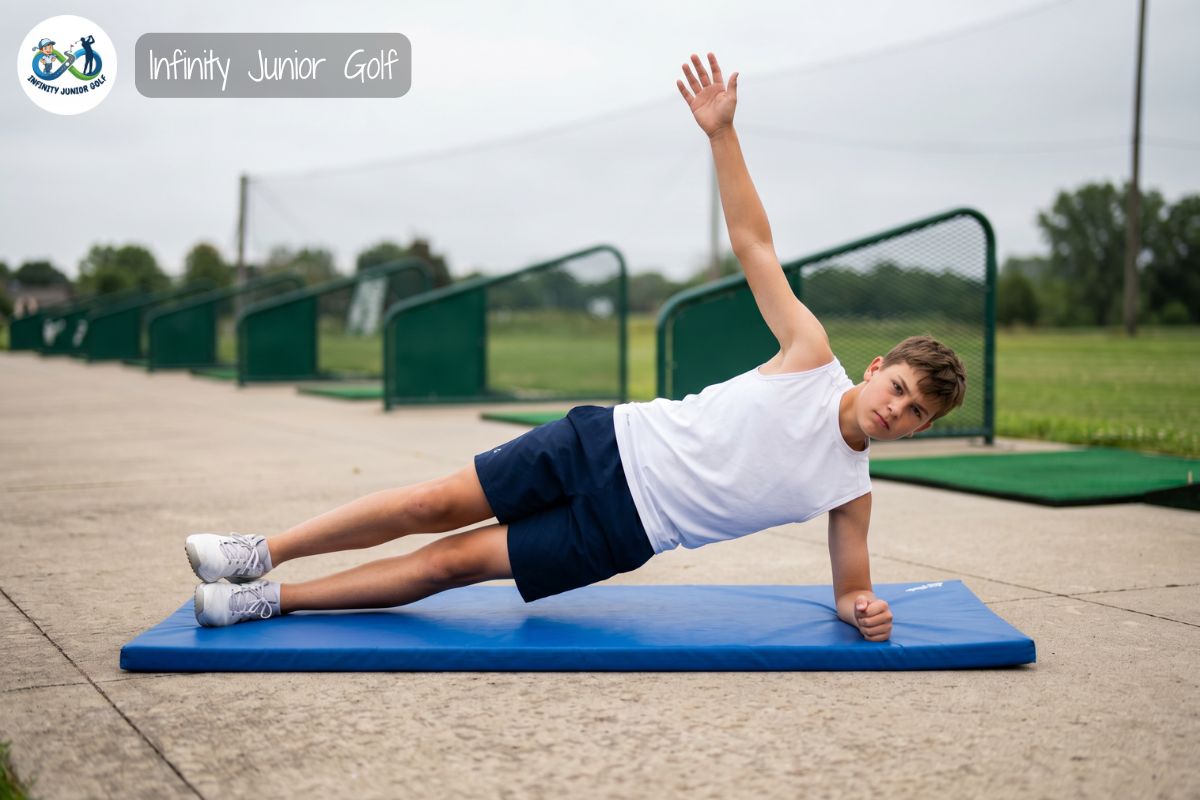
The plank family — anti-rotation as the foundation: Before a junior golfer can rotate powerfully, they need to be able to resist rotation — that’s what anti-rotation training is all about. Standard planks (holding a rigid, straight-body position on hands and toes), side planks (supported on one forearm with the body in a lateral line), and extended planks all teach the core to stay tight under load. These exercises directly train the spinal stabilizers and deep abdominals that protect the lower back during the swing. A strong plank is where every serious golf fitness program begins, and PGA coaches actively recommend them as foundational movements for golfers at every level.
Medicine ball rotational throws and slams: Once stability is established, it’s time to add rotation. Medicine ball exercises are arguably the most golf-specific training tool available to junior golfers. Rotational throws — standing sideways near a wall, coiling the body, and throwing the ball into the wall with full hip and torso rotation — directly mimic the mechanics of the golf swing. PGA coaches endorse medicine ball throws as a powerful way to build the rotational strength that transfers directly to the swing. These movements are simple, scalable, and immediately effective.
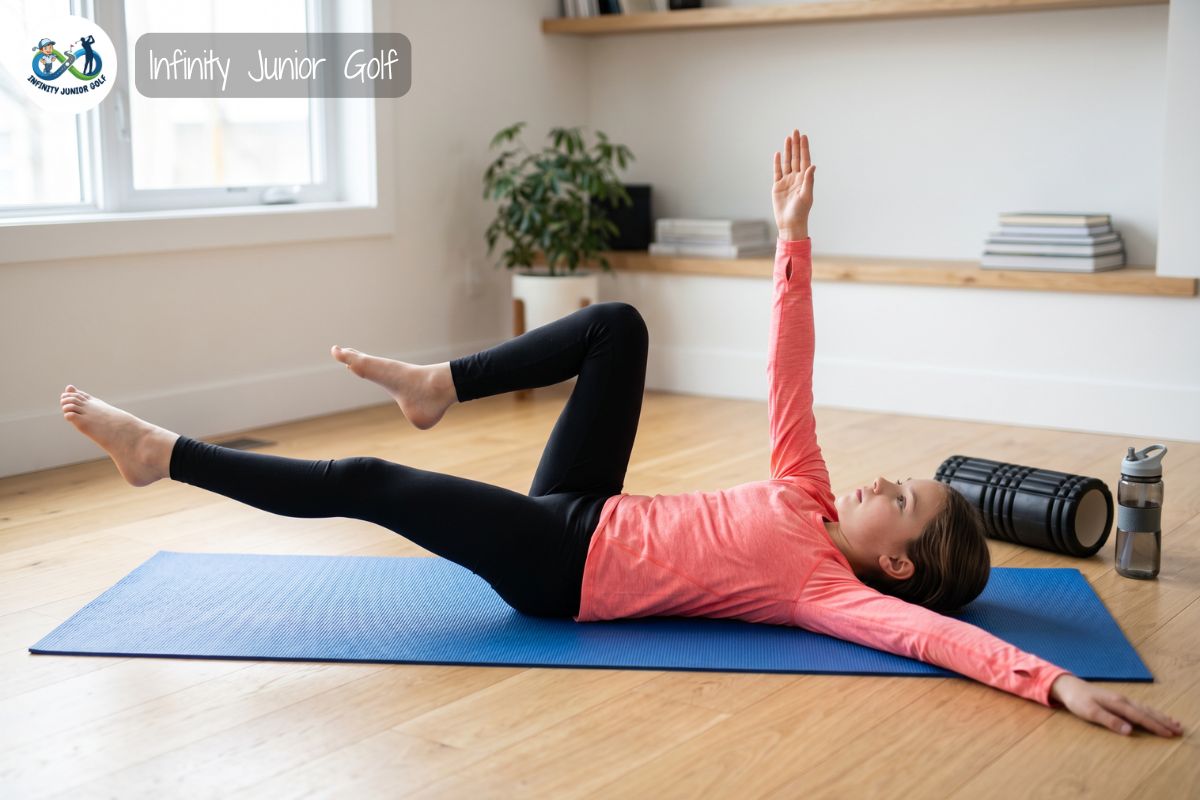
Russian twists and dead bugs: Russian twists, performed seated with the feet slightly elevated and the torso leaning back at a slight angle, directly train the obliques — the muscles responsible for rotational torque. They’re simple, require no equipment, and can be progressed easily as a junior golfer gets stronger. Dead bugs are a slightly more technical exercise: lying on the back with arms straight up and knees at 90 degrees, you alternate lowering one arm and the opposite leg toward the floor while keeping the lower back pressed flat. Dead bugs are exceptional for training the deep core stabilizers that protect the spine and keep the swing consistent under fatigue, and sports performance coaches widely program them for exactly this purpose — you can explore the full range of golf-specific options in TPI’s exercise library.
Bird dogs and glute bridges: Bird dogs — performed on all fours, extending one arm and the opposite leg simultaneously — develop the posterior chain, including the glutes, lower back, and shoulder stabilizers. They are low-impact, joint-friendly, and ideal for junior golfers because they build the kind of balanced, full-body stability that supports a long golf career. Glute bridges, where the golfer lies on their back with knees bent and feet flat, squeezes the glutes, and lifts the hips toward the ceiling, are a strong exercise for developing core-to-hip connectivity — the link that makes hip drive possible in the downswing — and the PGA highlights this kind of strength work for junior golfers specifically.
These exercises are the foundation of any junior golf fitness program. But knowing the exercises is only half the equation — the real difference comes when they’re arranged into a consistent, well-structured routine. That’s exactly what we build out in the next section.
Building a Weekly Core Training Routine
Frequency and recovery for growing bodies: Junior golfers are not small adults — their bodies are still growing and developing, which means recovery is as important as the training itself. A well-designed core training plan for juniors typically includes two to three dedicated core-focused sessions per week, with at least one rest day between sessions. Over-training is a real risk in youth sports, and the goal is always long-term development. Two focused, quality sessions each week will produce significantly better results than five rushed, fatigued ones.
Structuring a session from warm-up to finish: A productive core session for a junior golfer should follow a logical sequence. Begin with five to seven minutes of dynamic warm-up movements — hip circles, leg swings, thoracic rotations, and light body weight squats. These movements increase blood flow, activate the hips and thoracic spine, and prepare the nervous system for more demanding work. The main block should include three to four core exercises, performed as two to three sets of ten to fifteen repetitions each (or twenty to thirty seconds for timed holds). Finish with two to three minutes of light stretching focused on the hip flexors, obliques, and lower back. The entire session should take no more than thirty to forty minutes.
Progressive overload — the key to continued gains: One of the most commonly overlooked principles in junior golf fitness is progressive overload: gradually increasing the difficulty of exercises over time to continue stimulating adaptation. This doesn’t always mean adding weight. For junior golfers, progression can mean holding a plank for ten seconds longer, adding a slight rotation to a previously static exercise, introducing a light resistance band to a movement, or slowing down the tempo of each repetition to increase time under tension. Tracking progress — even just in a simple notebook or phone app — gives junior golfers a motivational benchmark and ensures they keep improving.
Safety first — exercise selection for different ages: Not all core exercises are appropriate for all ages. For younger juniors (ages eight to twelve), bodyweight exercises and light medicine ball work are ideal. Resistance bands can be introduced gradually from around age ten onward, and more structured resistance training can begin in the early teens with proper supervision and technique. The priority at every age is mastering movement quality before adding load. A junior golfer with perfect form and controlled rotational movement will always outperform one who has piled on weight at the expense of technique. For comprehensive, age-appropriate guidance, the Titleist Performance Institute is one of the world’s leading resources on junior golf fitness development.
Once you have the exercises and the routine in place, the next logical question is: what tools and training aids can take a junior golfer’s core training even further? Let’s look at the purpose-built equipment that bridges the gap between gym work and real results on the golf course.
Training Tools That Amplify Results
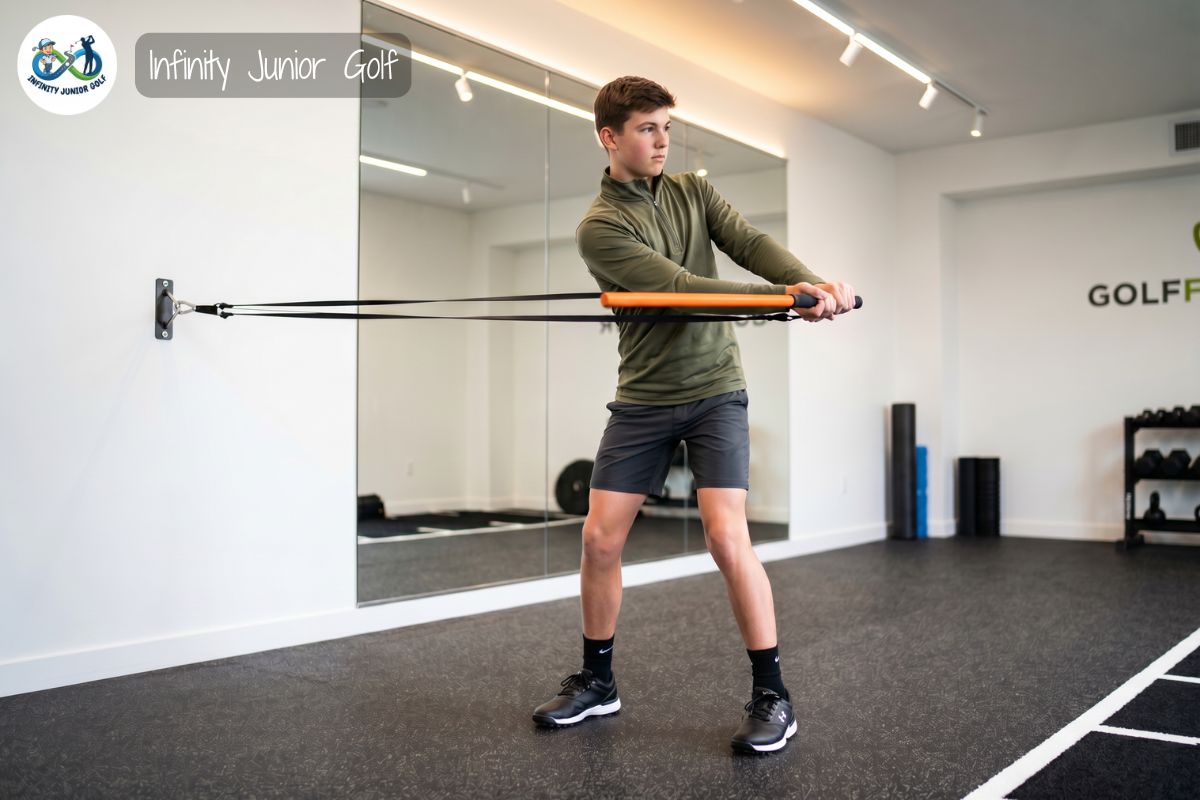
Resistance bands — the most versatile golf fitness tool: Resistance bands deserve a place in every junior golfer’s training kit. They are lightweight, inexpensive, highly portable, and incredibly versatile. For golf-specific core training, bands can be used for rotational cable pulls (mimicking the swing plane), anti-rotation presses, standing core rotations, and hip abduction exercises. The tension provided by a band closely replicates the kind of resistance the core experiences during the actual golf swing, making them one of the most transferable tools available to junior golfers of all ages.
Suspension trainers — functional core training redefined: The TRX suspension training system has become one of the most widely adopted tools in professional sports, and golf is no exception. The reason is simple: suspension training demands core engagement on nearly every exercise, because the unstable straps force the body to stabilize itself throughout every movement. For golfers, TRX specifically recommends exercises like the TRX Golf Rotation, the TRX Balance Lunge, and the TRX Plank — all of which develop the rotational stability and anti-rotation strength that directly power the swing.
🏌️
When it comes to training tools specifically designed to develop core rotation and swing power, the GolfForever Swing Trainer+ is in a category of its own — because unlike bands or general gym equipment, every exercise in the GolfForever system is built around asymmetrical resistance training that directly mirrors the rotational mechanics of the golf swing. I chose it as our top pick because of its purpose-built design, its status as the Official Golf Fitness System of the PGA TOUR, and a connected coaching app that delivers personalized streaming routines based on your individual strength and flexibility assessment. In a verified pilot study, golfers who used GolfForever three days per week for 30 days gained an average of 26 yards with their driver.
- ✅ Three-in-one system: asymmetrical cord-driven resistance bar, D3 swing weight heavy warmup club, and premium resistance bands with interchangeable handles
- ✅ Trains core rotation, flexibility, and power in one session
- ✅ Portable | Official PGA TOUR Fitness System | Used by Scottie Scheffler, Zach Johnson & more | Suitable for teens and adults
Medicine balls — explosive power in your hands: A quality medicine ball is one of the highest-value investments in a junior golfer’s fitness arsenal. Rotational throws, overhead slams, and partner-toss drills all develop the fast-twitch muscle fibers in the core that produce explosive power. The Titleist Performance Institute recognizes medicine ball work as one of the most effective methods for developing rotational power in junior golfers — the closest gym-based replication of the actual golf swing.
Golf-specific swing trainers — where fitness meets the range: Purpose-built golf swing training aids bridge the gap between the gym and the golf course. The GolfGym PowerSwing Trainer is a portable resistance cord system specifically designed to build the rotational strength and core stability used in the golf swing, and it has been used by coaches and performance trainers for years. SuperSpeed Golf’s overspeed training system uses a set of differently weighted clubs to neurologically retrain the body to swing faster — and the explosive rotational power this develops is built directly on a foundation of core strength, with dedicated junior sets available for players as young as five years old.
The tools are only as good as where you buy them. With so many options available worldwide, we’ve done the research for you — below are the six retailers we genuinely recommend for junior golfers looking to build core strength and swing power, no matter where in the world you’re based.
Brands and Tools That Help Juniors Thrive — Our Recommendations
The right training tools make all the difference when a junior golfer commits to building core strength. Whether you’re a parent looking to set your young player up for success, a coach searching for reliable equipment, or a junior golfer ready to take your game seriously, these six retailers offer the most relevant, high-quality products available worldwide. Each one has been selected specifically because their products relate directly to core training and explosive swing development — not simply because they sell golf gear.
Our Top Retailer Picks for Core Golf Training
GolfForever
The Official Golf Fitness System of the PGA Tour, GolfForever offers the GolfForever Swing Trainer — a three-in-one resistance bar and band system engineered specifically to improve core rotation, flexibility, and swing power. For golfers who want the complete setup, the Swing Trainer Pro bundles the trainer with a one-year app membership, Wall Anchor+, Mini Bands+, and a Stability Ball+ for a full at-home golf fitness system. What sets GolfForever apart from every other training tool in this article is the companion app, developed by PGA Tour physical therapists, which delivers a fully structured, personalized workout program alongside the hardware. In a pilot study, golfers who used the system three times per week for 30 days gained an average of 26 yards in driving distance — and the system is trusted and used daily by world No. 1 Scottie Scheffler, who signed on as brand ambassador after crediting GolfForever as a key part of his rise to the top of the world rankings. Gender-neutral and scalable to any fitness level, it’s suitable for junior golfers of all ages up to 18, making it the most complete and measurable core-focused golf training tool available to young players right now. I chose it as our hero product because no other tool combines purpose-built design, professional credibility, and a guided coaching experience in one package.
SuperSpeed Golf
SuperSpeed Golf is the world’s leading overspeed training system for golfers, and their Junior Training System is purpose-built for players aged 5–14 who are in the critical speed development window of their athletic careers — available in three age-specific sizes: the Pee Wee (ages 5–7), the All-Star (ages 8–10), and the Junior (ages 11–14). Each set uses a trio of lighter and heavier weighted clubs to neurologically retrain the body to swing faster — a process that directly expresses the explosive rotational power that core training is designed to build. SuperSpeed is trusted by tour professionals including 3x Major Champion Pádraig Harrington, and every set includes lifetime access to a free mobile app with guided training protocols, making it one of the most accessible and effective speed training tools a junior golfer can own.
GolfGym
GolfGym’s PowerSwing Trainer is a golf-specific portable resistance cord system designed to build exactly the rotational strength and core stability used in the golf swing — not a repurposed fitness product, but a tool engineered entirely for golf movement. The system isolates and strengthens the precise muscles activated during the swing, and GolfGym also offers a range of PowerSwing Trainer options suited to different player levels, making it a versatile and age-appropriate option. I keep coming back to GolfGym for golf-specific resistance training recommendations because their products are built around golf mechanics from the ground up, which is genuinely rare.
TRX Training
TRX is the world’s leading suspension training brand, widely used by professional athletes, coaches, and physical therapists to develop functional core strength. Their Suspension Trainer is ideal for junior golfers because virtually every exercise demands core engagement — the unstable straps force the body to stabilize throughout each movement, building the deep rotational stability that directly powers the swing. TRX has specifically developed golf-focused exercises including the TRX Golf Rotation and TRX Anti-Rotation, and their trainers ship globally with full access to their digital coaching library.
Perform Better
Perform Better has been the professional standard for functional sports training equipment since 1991, and their medicine ball range is the go-to choice for sports performance coaches worldwide. For junior golfers, medicine balls are one of the most effective tools available — rotational throws and slam exercises train the fast-twitch core muscles in a way that directly replicates the mechanics of the golf swing. Their range of ball weights allows juniors to start appropriately light and scale up progressively, and the quality of their products is consistently professional grade. I recommend Perform Better for medicine balls specifically because their construction quality and weight consistency are superior to most general sporting goods alternatives.
Rubberbanditz
Rubberbanditz offers heavy-duty resistance bands in a wide range of progressive resistance levels, making them one of the most practical and affordable core training tools a junior golfer can add to their program. Their bands are built for serious, repeated use — far more durable than standard retail bands — and the progressive tension levels mean a junior golfer can start with light resistance and scale up naturally as their strength and technique develop. Resistance bands are one of the most golf-specific training tools available, and Rubberbanditz offers some of the most durable, globally shipped options at genuinely accessible price points for families at any budget level.
Having the right gear is a solid foundation — but it’s what you do with it, consistently and correctly, that produces real results. In the next section, we’ll look at exactly how all of this core training shows up when your junior golfer steps onto the golf course — and what it means for their performance on the day that counts.
How Core Strength Translates to the Course
From the gym to the first tee: There’s a moment that every parent and junior golfer who commits to a core training program eventually experiences — the first time they step onto the course after a few weeks of consistent work and realize that something genuinely feels different. The swing feels more connected, more powerful, and more under control at the same time. When the core is stronger and more reactive, the body rotates more efficiently, the transition from backswing to downswing happens with better timing, and the clubhead accelerates through the ball with noticeably more speed.
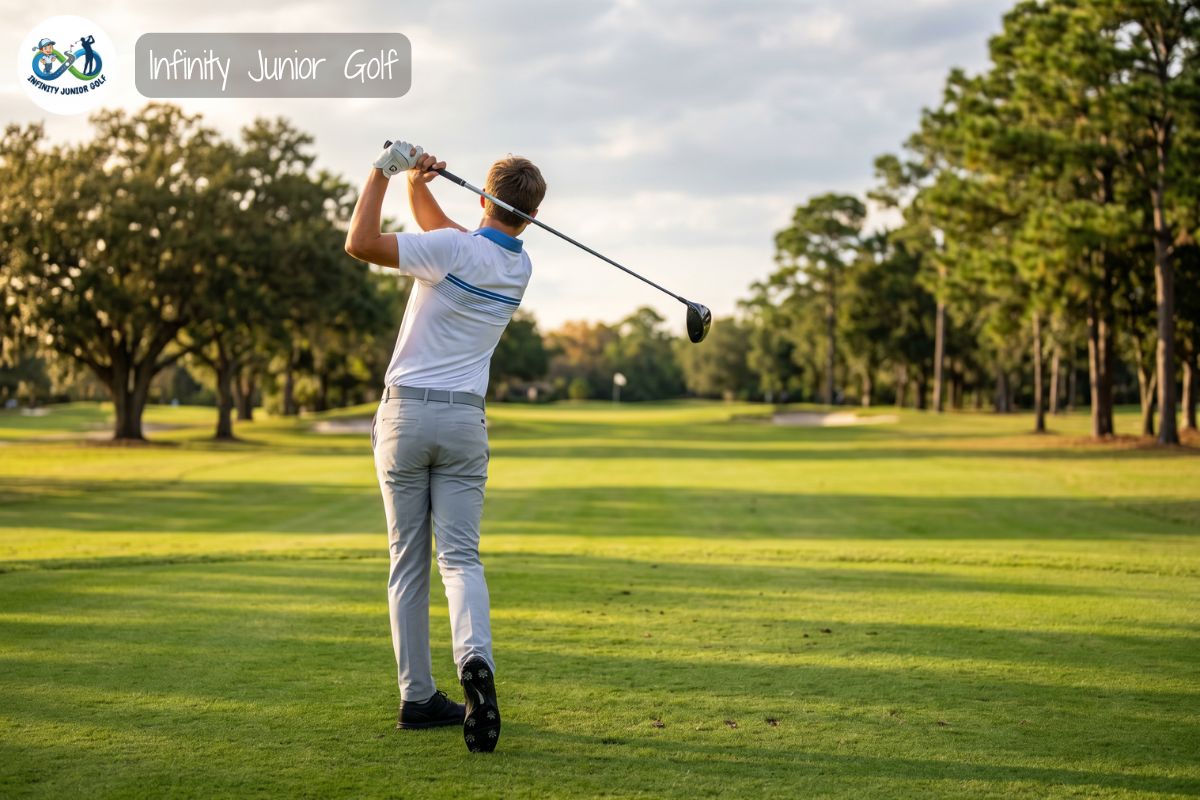
Driving distance and ball-striking consistency: The most immediately visible benefit of improved core strength for junior golfers is increased driving distance. When the core transfers energy efficiently through the kinetic chain, the clubhead arrives at impact with more speed — and that speed translates directly into yards. But it’s not just about distance. A strong, stable core also means the swing holds its shape under pressure. The posture stays intact through impact, the spine angle is maintained, and the follow-through is complete and balanced. Juniors with strong cores don’t just hit it farther — they hit it the same way every time, which is what turns raw distance into real scoring ability.
Injury prevention and longevity in the game: One of the most underappreciated benefits of core training for junior golfers is its role in protecting the body. The golf swing is a repetitive, high-torque movement that places significant stress on the lower back, hips, and shoulders — especially in developing bodies. As TPI’s research shows, low back pain and injury are often a direct result of movement restrictions in the upper spine and hips — and a well-conditioned core is the most effective way to address them. Junior golfers who train their cores appropriately are far less likely to develop the overuse injuries that end promising careers prematurely.
Mental confidence on the course: There’s a psychological dimension to core strength that often goes unspoken. When a junior golfer knows their body is strong, trained, and prepared, they approach the tee with a fundamentally different mindset. The confidence that comes from knowing you have done the physical work — that your core is ready, your rotation is primed, and your body is capable — is a real competitive advantage. Golf is one of the most mental sports in the world, and a strong, fit body gives junior golfers a physical platform from which genuine mental confidence can grow.
Now that we’ve covered the full picture — from the science of the core to practical training, the right tools, and real-world results — let’s put it all together in a set of practical, actionable tips that any junior golfer can start using right away.
Our Practical Tips For You
Here are ten practical, immediately actionable tips to help your junior golfer build a stronger core and a more explosive swing. Every one of these can be started today — no gym membership required.
| Tip | How to Implement It | How It Helps |
|---|---|---|
| Start with bodyweight exercises | Begin every core training phase with planks, dead bugs, and bird dogs before adding resistance. Mastering bodyweight form means the foundation is solid before any load is added. | Prevents injury and builds the neuromuscular patterns that make every future exercise more effective. |
| Train core 2–3 times per week | Schedule dedicated core sessions on alternating days (e.g., Monday, Wednesday, Friday) to allow adequate recovery. Keep sessions to 30–40 minutes to stay within the optimal training window. | Consistent, well-spaced sessions produce far better adaptation than sporadic heavy training sessions. |
| Include anti-rotation exercises | Add exercises like the Pallof press or banded anti-rotation hold to every session. These train the core to resist unwanted movement — exactly what the swing demands. | Anti-rotation strength stabilizes the spine and prevents power leakage through the transition. |
| Use medicine ball throws | Perform rotational throws against a solid wall (or with a partner) two to three times per week, starting with a 2–4 lb ball. Focus on full hip and shoulder rotation, not just arm speed. | Medicine ball throws directly train explosive rotational power — the closest gym-based replication of the golf swing. |
| Add resistance bands to rotation drills | Anchor a resistance band at hip height, stand sideways, and perform slow, controlled rotations mimicking the swing. Start light and add resistance as form improves. | Band resistance trains the exact muscles and movement patterns used in the golf swing, with consistent tension throughout the range of motion. |
| Don’t neglect the glutes | Include hip bridges, single-leg glute bridges, and resistance band walks in every core session. The glutes are technically part of the core system and are the primary engine of hip drive. | Strong glutes power the lower-body initiation that launches the kinetic chain — the first link in explosive swing power. |
| Prioritize quality over speed | Slow down every core exercise and focus on controlled movement, not how many reps can be completed quickly. A tempo of two to three seconds in each direction is ideal for most exercises. | Slow, controlled reps keep the core musculature under tension longer, producing greater strength gains and better motor pattern development. |
| Track progress weekly | Keep a simple training log — even a phone note — recording exercises, sets, reps, and how the session felt. Review it weekly and add a small progression when exercises feel comfortable. | Tracking creates accountability and ensures progressive overload, which is the mechanism that produces continued improvement. |
| Warm up the thoracic spine | Before every session and round, perform thoracic rotation stretches — sitting or kneeling, placing hands behind the head, and rotating through the mid-back. Do ten controlled rotations each side. | Golf rotation happens primarily through the thoracic spine. A mobile, well-warmed thoracic region allows full rotation without compensation from the lower back. |
| Make it fun and game-like | Use partner med ball throws, timed plank challenges, or reaction-based rotational drills to keep sessions engaging for junior golfers. Variety prevents boredom and maintains long-term consistency. | Junior golfers who enjoy their training are far more likely to stay consistent — and consistency is the single greatest predictor of long-term results. |
With a clear action plan now in hand, you probably have a few specific questions about how all of this applies to your junior golfer’s situation. Here are the answers to the ones we hear most often.
FAQs
Here are some of the most common questions about core training for junior golfers.
At what age should a junior golfer start core training?
Bodyweight core exercises like planks, bird dogs, and dead bugs are safe and beneficial from around age eight or nine. Light resistance tools can be introduced from around age ten to twelve, with more structured training beginning in the early teens under proper supervision.
How quickly will a junior golfer see results from core training?
Most junior golfers notice improvements in swing feel and stability within four to six weeks of consistent core training, with measurable increases in swing speed and distance typically emerging after eight to twelve weeks of regular work.
Can core training be done at home without gym equipment?
Absolutely. The majority of the most effective core exercises for junior golfers — planks, dead bugs, bird dogs, Russian twists, and glute bridges — require nothing but a mat and some floor space. Resistance bands add significant value and are inexpensive, but they are a bonus, not a requirement.
Will core training help with more than just the full swing?
Yes — a strong, stable core benefits every part of the game. Short iron control, chipping accuracy, putting posture, and the ability to hold form under the pressure of a competitive round all improve when the core is well-trained.
Our Related Articles
10 Essential Stretches For Young Golfers
Golf is one of the most accessible and rewarding sports a young person can take up, but it places surprisingly demanding physical requirements on the…
Read More
Why Goal Setting Matters For Young Golfers
Goal setting transforms how young golfers approach the game, turning aimless practice sessions into purposeful development opportunities. When junior players establish clear targets, they create…
Read MoreConclusion
Building an explosive golf swing starts from the inside out. A strong, well-trained core is the single most important physical attribute a junior golfer can develop — it powers the kinetic chain, protects the body, and creates the consistency that turns potential into performance. By incorporating the right exercises, following a structured weekly routine, and using purpose-built training tools, junior golfers anywhere in the world can make measurable improvements to their swing power in a matter of weeks.
Whether your junior golfer is just getting started or looking to take their game to the next level, the fitness foundation they build now will pay dividends for the rest of their golf career. Start with the bodyweight basics, add resistance progressively, stay consistent, and trust the process — the driving range results will follow.
Is your junior golfer already doing any core training, or are you just getting started? Drop your thoughts, questions, or experiences in the comments below — we’d love to hear how it’s going!
