
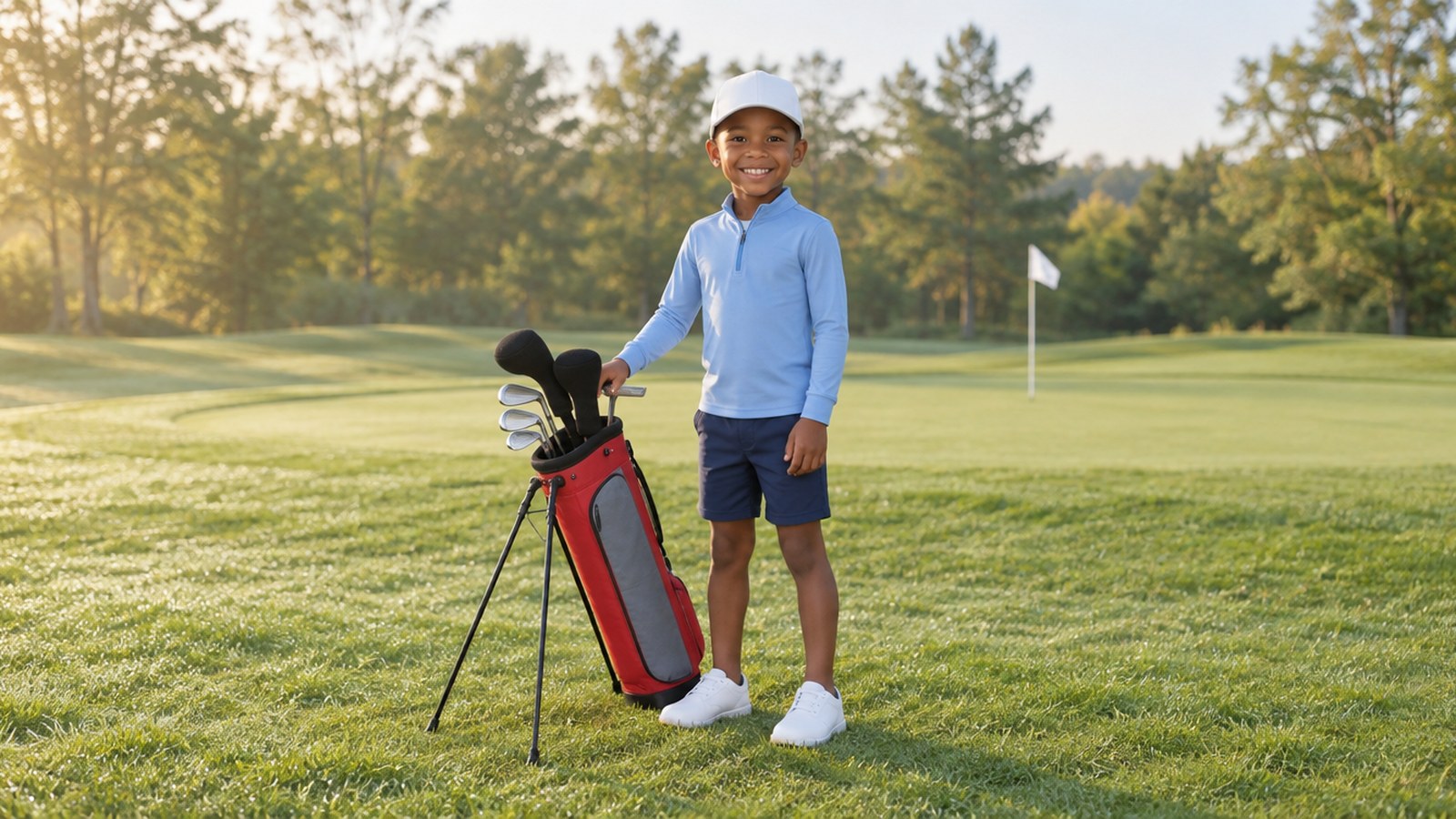

Parents who search for kids golf clubs durability are usually asking two questions at once: will this set survive a season of being dropped, dragged and thrown in the car, and will it still fit by the end of it? Callaway’s XJ junior sets sit on golf shop shelves from the US and the UK to Australia, and the 2026 XJ Junior Level 2 is the size most families meet first, the one where a child moves from a handful of clubs to a full bag of six. This review looks at what a season actually does to that set, and which part gives out first. Wherever your playing season falls on the calendar, the wear is the same.
I’m Al. I spent years teaching high school math and science, and now I’m at home with two boys, five years apart, who have grown through more junior clubs than I care to count. I’m not a club fitter or a PGA professional, and this site doesn’t name the gear we own, so nothing here comes from my own kids swinging an XJ. What I do bring is a habit of reading the warranty before the marketing and checking the numbers behind every claim. Read on, and you’ll know where this set earns its price and where it doesn’t.

⛳🧒 Quick Verdict
Callaway XJ Junior Level 2 Complete Set (2026)
★★★★☆ | ~$549.99 USD | Premium
Best for: Juniors 47 to 53 inches tall who play every week
Rated on Callaway's specifications and warranty and on owner reviews of the previous XJ2, not my own children's use: built to outlast the time a growing child fits it, at a price that asks a lot.
- Titanium driver and graphite junior-flex shafts in every club
- A two-year Callaway warranty that covers most of the time a child fits the set
- Stand bag and headcovers in the box
- Worth knowing: $200 USD more than the previous XJ2, for a set a child outgrows in one to three years
👉 Shop Callaway XJ2 (opens in a new tab)
Photo 17
What You're Getting
Callaway's XJ line covers children 42 to 57 inches tall in three levels, with a separate XT set (opens in a new tab) for teens. Callaway pitches XJ as a premium entry (opens in a new tab) into the game for a growing player, built around titanium drivers and graphite shafts made for juniors. Level 2 is the middle size, for juniors 47 to 53 inches (opens in a new tab) tall; Level 1 covers 42 to 46 inches and Level 3 covers 54 to 57 inches.
In the box are six clubs, a stand bag and headcovers. Here's what Callaway publishes about them.
Callaway XJ Junior Level 2 (2026) at a glance
| Detail | What's published |
|---|---|
| Player height | 47 to 53 inches |
| Clubs | Driver, fairway wood, 7-iron, 9-iron, sand wedge, putter |
| Driver | Titanium, 17° loft, 34.5 in |
| Fairway wood | 19° loft, 33.5 in |
| Irons and wedge | 7-iron 36°, 9-iron 42°, sand wedge 52° |
| Putter | 27 in, 70° lie; model not named by Callaway |
| Shafts | Graphite, junior flex |
| Also included | Stand bag and headcovers |
| Hands and colors | Right hand in Black, Blue/White or Red/White; left hand in Black only |
| Set or bag weight | Not published |
| Warranty | Two years (US; Australia and New Zealand) |
| Price tier | Premium |
Checked November 2026 on Callaway's US product page.
Price and availability: In the US, Callaway sells the 2026 Level 2 for $549.99 USD (opens in a new tab), and Golf Galaxy lists it at the same price (opens in a new tab). The previous XJ2 listed at $349.99 USD (opens in a new tab) on Walmart, so the 2026 version costs $200 USD more. In the UK, The Golf Shop Online lists the Level 2 at £329 GBP (opens in a new tab) against an RRP of £399. In Australia, House of Golf lists the 2026 XJ-2 at $559.96 AUD (opens in a new tab) on sale. Callaway's own store adds a 30-day guarantee (opens in a new tab): if you're not satisfied, you can return the set for a refund. Prices move often, so treat these as a guide to where the set sits in each market.
That's what you're paying for. The more useful question is which of those parts will still be in good shape when your child has played a full season on them.
Key Features
The clubs are built from the durable stuff: A titanium driver head and graphite shafts are what you'd find in a good adult set, and Callaway uses both throughout the XJ line, with every shaft in a junior flex (opens in a new tab). In normal junior use, heads and shafts aren't what wears out in a season; grips, faces and bags are. Callaway publishes no durability testing for the XJ, so the honest summary is that the materials are premium and the proof is in the warranty and in owners' experience, both covered below.
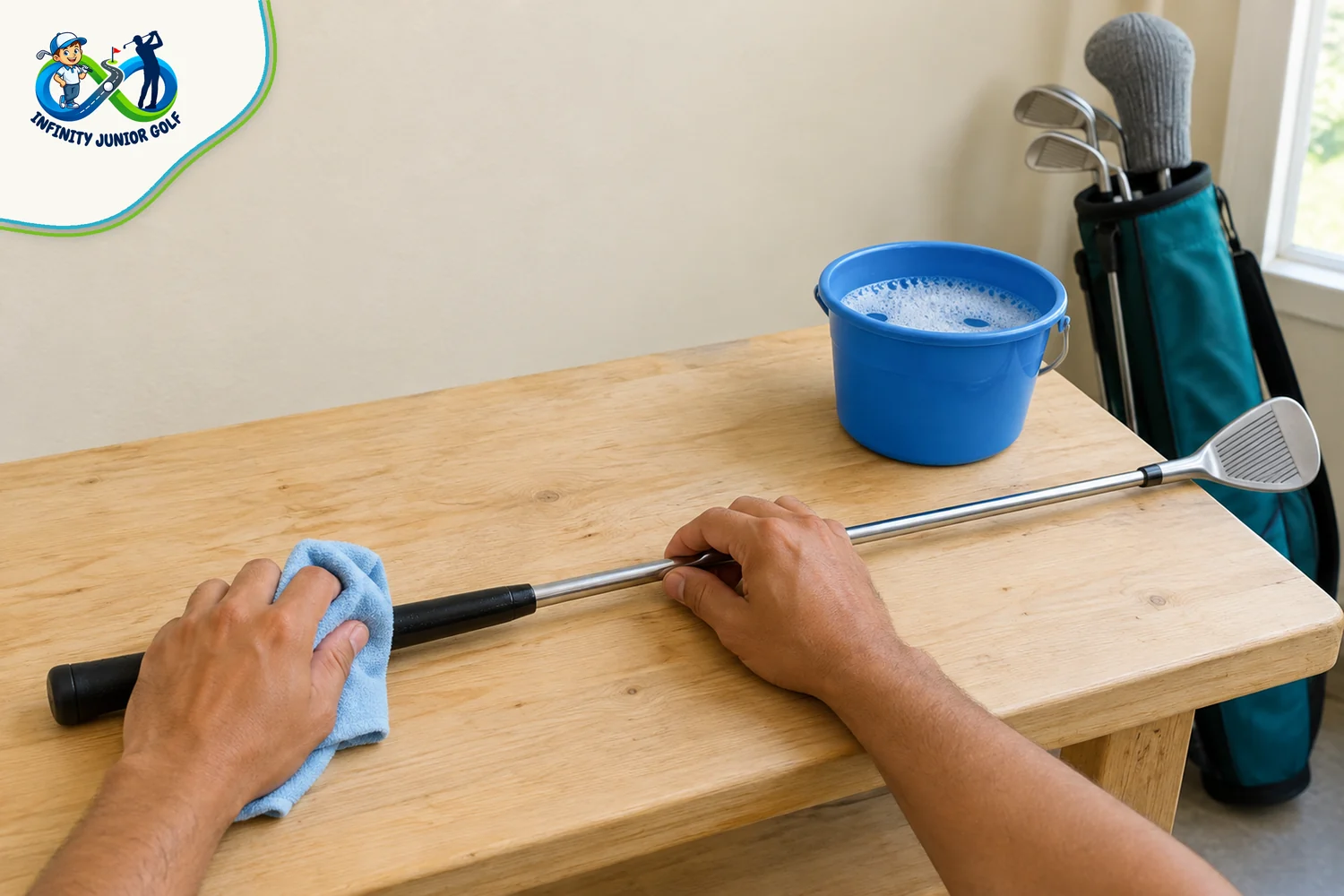
Grips are the part a season really uses up: Golf Digest's guideline is to re-grip once a year (opens in a new tab) or every 40 rounds, and it names dirt, heat and the oil from your hands as what breaks a grip down. A junior who plays every weekend and hits balls midweek reaches that mark sooner than a casual adult does. With luck, your child grows out of the set before the grips are completely gone. Wiping grips with a damp cloth after a round and keeping the bag out of a hot car helps them last.
The bag is the weak point to watch: Callaway includes a stand bag and headcovers, but it doesn't publish the bag's weight or materials. That matters, because the bag is where complaints about Callaway's junior sets tend to land: GOLF.com's editors noted that owner reviews of Callaway's teen XT set said the bag may not match (opens in a new tab) the quality of the clubs. Stand legs, zips and shoulder straps take the knocks a child hands out across a season. If the bag gives up before the clubs do, a lighter junior bag costs far less than a new set.
Six inches of height is the real clock: Level 2 covers a 6-inch band, 47 to 53 inches. KidsHealth says children between 6 and 12 grow about 2.5 inches (opens in a new tab) (6 to 7 cm) a year. So a child bought the set at 47 inches has roughly two and a half years in it; a child bought it at 50 inches, a little over a year. Buying the next size up to stretch that is the mistake to avoid: the Titleist Performance Institute's advice is to keep juniors in clubs as short as possible (opens in a new tab) for as long as possible, so the swing grows with the child. Measuring your child in shoes before you buy is the step that matters most with a first set or any set after it.
The warranty covers most of the fit window: Callaway says its products are backed for two years (opens in a new tab) in the US, and Callaway South Pacific gives the same two-year term (opens in a new tab) on clubs bought in Australia and New Zealand. Two years is about as long as most children will fit a 6-inch band, so a defect has a fair chance of showing up while the set is still covered. The Australian terms exclude normal wear and tear, cosmetic marks and misuse, and need proof of purchase; Callaway's US page doesn't spell out its exclusions. Either way, keep the receipt, and don't expect worn grips or a scuffed bag to count as defects.
Materials and warranty tell you what the set is built to handle. What owners report, and what a full season of junior golf asks of it, tells you how that plays out.
How It Performs in Real Life
Whose evidence this is: None of what follows comes from my own children using an XJ. It rests on Callaway's published details, retailer listings in three countries and what owners report, following the approach set out in how we assess gear. The 2026 version is new enough that owner feedback is thin: Golf Galaxy's listing shows one review (opens in a new tab), and it was collected with an incentive. The previous XJ2 has more behind it, averaging 4.8 out of 5 (opens in a new tab) from 24 ratings on Walmart, with build quality among the review topics.
A season of weekly golf is a lot of handling: Weekly league play, lessons and range sessions add up fast, which is part of why a junior league is such good value for a child's game and such a test for their gear. Clubs come in and out of the bag several times a round, the bag goes in and out of the car several times a week, and the stand legs open and close at every shot. On the evidence available, the XJ2's clubs handle that well; the bag is the piece most likely to show it first.
Outgrown, not worn out: This runs through every piece of junior gear. Across two boys and roughly a decade, we've replaced most of our clubs, bags and shoes repeatedly as they grew, and the replacing has had little to do with wear. That's why I'd put size first and brand second, in that order. Size first, because a set that doesn't fit undoes everything else. Then brand, because the better ones earn it with shaft flex suited to a slower swing, sensible lofts and build quality that survives being thrown in the back of the car several times a week. Junior clubs get outgrown, not worn out, and if you're still working out what that means for your budget, so are we.

🏌️🔧 Recommended
Callaway XJ Junior Level 2 Complete Set (2026)
Premium materials and a two-year warranty mean the XJ2 should still be in good order when your child grows out of it.
- Titanium driver, graphite junior-flex shafts
- Two-year warranty in the US, Australia and New Zealand
👉 Shop Callaway XJ2 (opens in a new tab)
Photo 18
Growth is the real cost, not the sticker price: Between roughly eight and fourteen, you replace clubs on a cycle that has nothing to do with wear, so the useful sum isn't what one set costs but what four sets cost. At $549.99 USD (opens in a new tab), the XJ2 is a lot to spend on one stop in that cycle, which is why it's worth looking at how families keep junior golf affordable across those years. I still wouldn't buy cheap through the growth years. A child who plays regularly gets more from good equipment while their habits are forming, and decent gear holds its resale value far better than entry-level does.
Secondhand is where a durable set pays you back: A set that's outgrown with years of life left is exactly what the used market wants, and it's badly underused. The same pattern holds for junior golf shoes, which a child outgrows long before the soles give out. Clean grips, an intact bag and every headcover still in it are what make a junior set easy to sell on, so the care you take through a season comes back to you at the end of it.
How it stacks up against other premium sets: In our five-set comparison of junior sets, Callaway's XJ sat alongside US Kids Golf, TaylorMade, Cobra and PING. What sets the XJ2 apart on durability is the two-year warranty and the six-club bag; what holds it back is the price and the absence of any trade-in scheme for outgrown clubs.
Put the build, the warranty and a season's worth of wear side by side, and a clear list of strengths and weaknesses falls out.
Pros and Cons

Pros
- Titanium driver (opens in a new tab) and graphite junior-flex shafts throughout
- A two-year warranty (opens in a new tab) that covers most of the time a child fits the set
- Six clubs, a stand bag and headcovers, so there's nothing to add on day one
- Sold in the US, the UK, Australia and elsewhere, in both hands
- The previous XJ2 averages 4.8 out of 5 (opens in a new tab) from 24 owner ratings
Cons
- $549.99 USD (opens in a new tab), $200 USD more than the previous XJ2, for a set a child outgrows in one to three years
- Almost no owner feedback on the 2026 version yet
- The bag is the likeliest part to wear first, and its weight isn't published
- No trade-in scheme for outgrown clubs, and left hand comes in Black only
Well built for what it is; the question is whether a two-year fit window justifies a premium price.
Photo 19
Our Verdict
The XJ2 is built to outlast its own fit window. Titanium and graphite in junior specs, a full six-club bag and a two-year warranty add up to a set that should leave your child's hands in good enough shape to sell or pass on, which is the real test of durability in kids' clubs.
What keeps it at four stars is cost and evidence. The 2026 price is $200 USD higher than the previous generation's, there's almost no owner feedback yet on this version, and the bag is the part most likely to need replacing first. Callaway also offers nothing to help when your child moves up a size.
For a junior 47 to 53 inches tall who plays every week and is ready for a full bag of six, it's a set I'd shortlist, ideally bought near the bottom of the height band so it gets the full two years or so of use. For a child near 53 inches, or a family on a tight budget, one of the alternatives below makes more sense.

🏆🧰 The Bottom Line
Callaway XJ Junior Level 2 Complete Set (2026)
★★★★☆ | ~$549.99 USD | Premium
Best for: Weekly junior golfers 47 to 53 inches tall, bought near the bottom of the band
A set that will be outgrown long before it's worn out, with a warranty that lasts about as long as the fit does; you're paying a premium for that peace of mind.
👉 Shop Callaway XJ2 (opens in a new tab)
Photo 20
How It Compares
Durability matters less if a set is cheap to replace, or if the maker takes the old one back. Three alternatives take those routes.

🔄📏 Alternative
US Kids Golf UL7 5 Club Stand Set
Price tier: Mid-range
The UL7 5 Club Stand Set comes in six sizes from 48 to 66 inches, each a 3-inch band, with a driver, 4 hybrid, 7 iron, pitching wedge, putter and stand bag, for $309.99 USD (opens in a new tab). It has one club fewer and narrower size bands than the XJ2, but U.S. Kids Golf runs a trade-up program that GOLF.com calls excellent (opens in a new tab) for offsetting the cost of moving up as a child grows. It suits a family that expects to buy several sizes and wants to trade outgrown clubs in.
👉 Shop US Kids UL7 (opens in a new tab)
Photo 21
💵🏌️ Alternative
Wilson Profile Medium Club Set (Junior)
Price tier: Mid-range
Wilson's Profile Medium is a five-club set with a bag for juniors 50 to 56 inches (opens in a new tab) tall, roughly ages 8 to 11, at $259.99 USD from GlobalGolf. It costs a little under half as much as the XJ2 and starts its height band 3 inches higher, though it carries one club fewer. It's the better choice for a family that wants a brand-name set and expects to replace it within a year or two anyway.
👉 Shop Wilson Profile (opens in a new tab)
Photo 1
🧩💶 Alternative
Decathlon Inesis Kids' Golf Set 8-10 Years
Price tier: Budget
Decathlon's Inesis kit is four clubs and a stand bag for children 1.25 to 1.40 m (opens in a new tab) tall, about 49 to 55 inches, at €120 EUR in Ireland, with a two-year warranty. Its shafts are a glass-fiber and carbon mix rather than graphite, and it has two clubs fewer than the XJ2, at a fraction of the price. It suits a family in Europe testing whether a child will stick with golf before spending on a premium set.
👉 Shop Decathlon Inesis (opens in a new tab)
Photo 2
Outside the US, check shipping before you compare prices. Worldwide Golf Shops sends orders abroad at a $100 USD flat rate (opens in a new tab), and GlobalGolf adds $39.99 USD (opens in a new tab) to international orders for each complete set, so a local stockist often works out cheaper. For a junior who plays every week, is ready for a full bag of six and starts near 47 inches, the XJ2 is still the one built to see out its whole fit window in good shape.
FAQs
Five questions parents ask about how long kids' clubs last.
How long do kids' golf clubs last?
Physically, a well-made junior set lasts several seasons; the fit runs out first. Children aged 6 to 12 grow about 2.5 inches a year (opens in a new tab), so a set built for a 6-inch height band usually fits for one to three years, depending on where in the band your child starts.
Is it worth paying more for clubs a child will outgrow?
For a child who plays regularly, a better set helps while their swing habits are forming, and it holds its resale value better. For an occasional player, a cheaper set is a sensible way to find out whether golf will stick.
When should junior golf grips be replaced?
Golf Digest's guideline is once a year (opens in a new tab) or every 40 rounds, sooner with heavy use. Many junior sets are outgrown before the grips need replacing, but a smooth, shiny grip on a set that still fits is worth changing.
Does Callaway's warranty cover worn grips or a damaged bag?
Callaway offers two years (opens in a new tab) of cover, but it's for defects. Its Australian and New Zealand terms exclude normal wear and tear (opens in a new tab), cosmetic marks and misuse, and require proof of purchase. Keep the receipt, and check the terms for your country.
Should I buy the next size up so the set lasts longer?
No. PGA.com's advice is that clubs that are too heavy or long create bad habits (opens in a new tab) that are hard to break later. I bought my eldest's first set too big because I'd been told he'd grow into it. I couldn't tell you the brand now, but I remember him working harder than he needed to and enjoying it less.
Our Related Articles

Picking a junior golf set feels simple until you actually stand in front of five options that all claim to be “the one.” Shaft
Read article

A first set of golf clubs is the one purchase nearly every golfing family makes, and it’s usually made on a guess. The sets
Read article

Golf has a reputation for being expensive, and I won’t pretend that reputation came from nowhere. By the time you factor in clubs, green
Read article
Conclusion
Callaway's 2026 XJ Junior Level 2 is a well-built set whose clubs should still be in good order when a growing child moves on, with a two-year warranty that runs about as long as the fit does. The bag is the part to keep an eye on, and the price asks a lot for a set most children will use for one to three years. For a junior of 47 to 53 inches who plays every week, bought near the bottom of the height band, it's a set that will see out its time and still have something left for the next owner.
When your junior outgrew their last set, what was the first part to show its age?
