


Golf has a reputation for being expensive, and I won’t pretend that reputation came from nowhere. By the time you factor in clubs, green fees, lessons, and the occasional tournament entry, the numbers can look daunting — especially if you’re a parent just trying to figure out whether your child actually likes the game before committing your savings to it. I’ve had that same conversation with myself. More than once.
But here’s what I’ve learned after years of watching my two boys navigate junior golf on a family budget: the cost of getting a child into golf is far more manageable than most parents fear, and the cost of keeping them in it depends almost entirely on the choices you make along the way. This article walks through each of those choices — equipment, playing, practice, and coaching — and shows you exactly where the money goes and how to spend less of it without shortchanging your junior golfer’s development. Let’s get into it.
⛳🏌️
U.S. Kids Juniors’ UL7 5 Club Stand Set
I chose this set specifically because it re-frames what “affordable” means for junior equipment — it’s not about the lowest sticker price, it’s about the lowest cost over time.
A properly fitted U.S. Kids set holds strong resale value and qualifies for the brand’s trade-up program, so as your child grows the family recoups value rather than starting from zero.
- ✅ Height-fitted, not age-fitted
- ✅ Beginner to intermediate
- ✅ Includes carry bag
- ✅ Ships internationally via Worldwide Golf Shops
- ✅ Full set: driver/wood, hybrid, irons, wedge, and putter
| ~$309.99 | Mid-range
👉 Shop UL7 Stand Set (opens in a new tab)Where the Money Actually Goes in Junior Golf
The five cost centers: Equipment, green fees and range time, lessons, tournament entries, and travel. That list looks intimidating at a glance, but it’s worth understanding that most families of beginner juniors are only dealing with the first two — and often just one. A child who is six years old and playing nine holes a handful of times a year with a parent doesn’t need lessons, tournament entries, or travel. They need clubs that fit and somewhere to swing them.
The cost-barrier problem is real — but it’s largely perceptual. A Delphi consensus study published in the International Journal of Golf Science (opens in a new tab) found that the perception of cost is consistently identified by experts as one of the top barriers keeping young people out of golf. The study specifically noted that the gap between adult and junior membership costs, and the burden of equipping multiple siblings, compounds the problem for average families. Knowing this matters: it means the barrier is as much psychological as financial, and that addressing it head-on — with real numbers and real options — is half the battle.
Context scales with commitment. A recreational junior playing weekend rounds with a parent might spend a few hundred dollars on equipment and nominal green fees. A competitive junior entering junior tournaments (opens in a new tab) and traveling to regional events is an entirely different financial proposition. The families who get into trouble are usually the ones who skip from stage one to stage three without a clear-eyed balanced schedule (opens in a new tab) — and the spending that comes with it.
Junior golf participation is growing fast. PGA REACH (opens in a new tab) reports approximately 4 million junior golfers aged 6–17 in the US in 2025, up 58 percent since 2019. That surge has brought more programs, more discounts, and more free entry points than at any point in the sport’s history. The resources exist. You just need to know where to look.
Building a realistic picture of where costs land is the first step toward managing them. Once you know which category you’re actually in — recreational beginner, developing player, or competitive junior — the decisions in the sections that follow become much simpler.
Smart Ways to Handle Equipment Costs
Fit by height, not by age. The single most common equipment mistake junior golf parents make is buying clubs based on their child’s age or buying a cut-down adult club because it seems economical. Both approaches typically result in clubs that are the wrong length for the child’s actual swing, which creates compensations that are hard to fix later. The junior size chart (opens in a new tab) at Worldwide Golf Shops makes the right call straightforward: measure your child’s height and buy to that. It costs nothing to check.
Buy slightly large, not slightly small. If your child is right on the border between two sizes, go up rather than down. A club that’s slightly long is far more forgiving than one they’ll outgrow in six months. This is one of the most practical money-saving moves available to junior golf parents, and it requires no compromise on quality — just an honest measurement.
Trade-up programs are genuinely valuable. U.S. Kids Golf runs a TradeUP program that lets families trade outgrown clubs for store credit toward the next size up. This substantially changes the real cost of a properly-fitted set: you’re not spending $300 every eighteen months, you’re spending the difference between your trade-in credit and the new set price. Describe this to any parent who hasn’t heard of it and watch the mental arithmetic shift. The brand also offers a “6th Club Free” benefit when you register a five-club purchase — a free additional club added to your set. Both are available through Worldwide Golf Shops, where U.S. Kids clubs are fully stocked.
The used-club market is underrated. Golf equipment in general holds its value well, and junior equipment holds it especially well because children often outgrow clubs before they wear them out. Pre-owned junior sets in good condition are widely available through specialty resellers, and at the right price point they make a compelling first step — particularly for a child who hasn’t yet committed to the game. Once you know the child is staying in golf, moving to a new fitted set makes more sense. Families looking for first-time players (opens in a new tab) options should weigh both routes honestly.
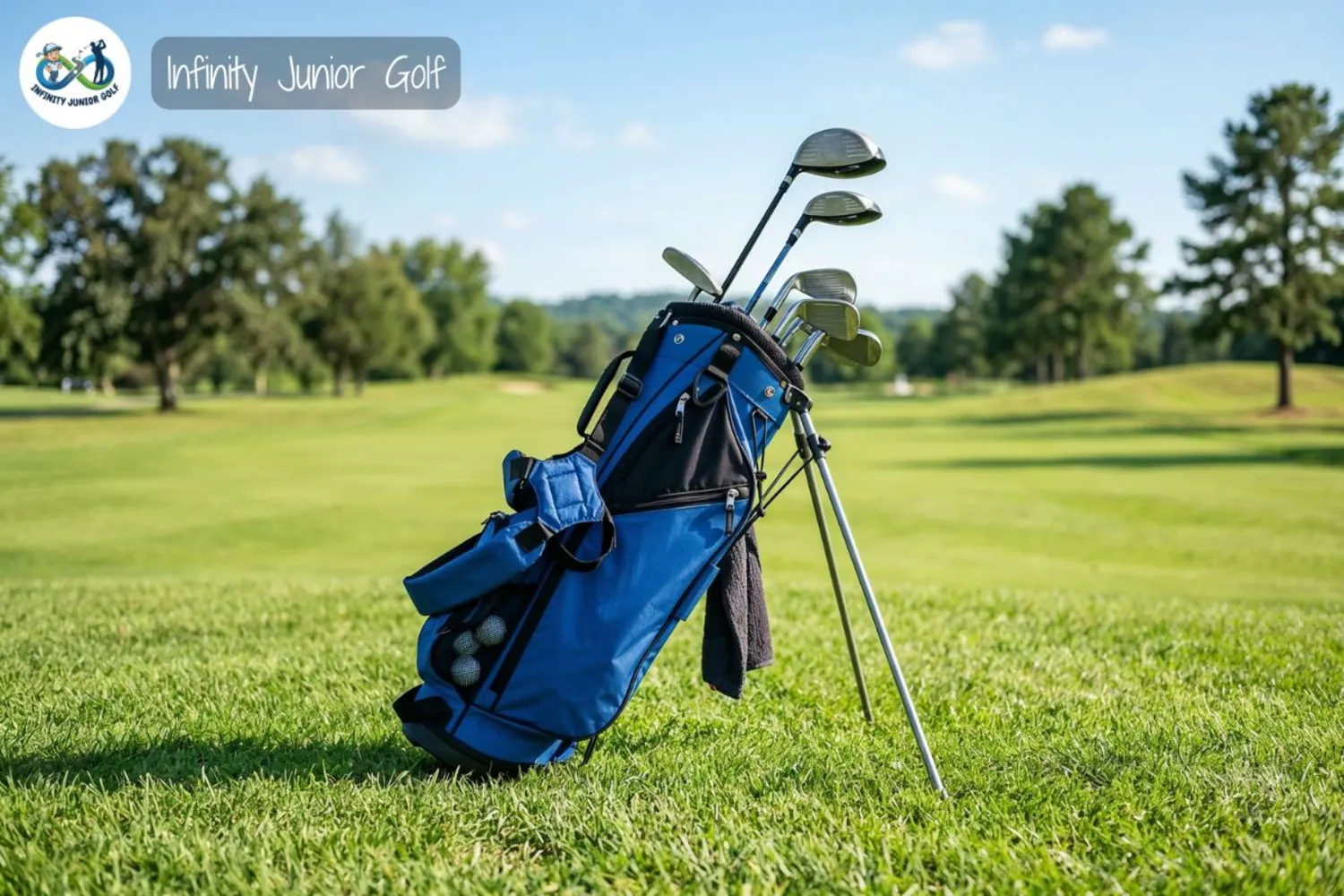
Know what you’re getting with complete sets. The junior club sets (opens in a new tab) market has matured considerably. A modern entry-level set from a specialist junior brand includes a driver or fairway wood, hybrid, a couple of irons, a wedge, and a putter — plus a lightweight carry bag that won’t wreck a small child’s posture. That’s everything a beginner needs to play a real round of golf. The lightweight bag (opens in a new tab) question matters more than most parents expect: an oversized adult bag on a 10-year-old is a recipe for bad habits and a sore back.
🏌️
Chosen specifically because it qualifies for U.S. Kids’ trade-up program — so the $309.99 entry price is really an investment in a revolving credit cycle as your child grows, not a one-time sunk cost.
- ✅ Height-fitted across multiple size ranges
- ✅ Lightweight graphite shafts
- ✅ Carry bag included
- ✅ Ships globally via Worldwide Golf Shops
Hand-me-downs work — within limits. Clubs passed from an older sibling to a younger one are a legitimate money-saver, but only if the fit is close. A set that was fitted for a 12-year-old is not going to serve a 7-year-old well, regardless of brand. If the heights are within a size bracket, it works. If not, it’s false economy.
The equipment conversation is the one that tends to scare families most. Once you’ve made a sensible first purchase — fitted, from a brand with trade-up value, at a price that reflects actual quality — the rest of the cost picture gets considerably more manageable.
Affordable Ways to Play and Practice
Youth on Course changes the green-fee equation. The Youth on Course (opens in a new tab) membership program allows juniors aged 6–18 to play thousands of participating courses in the US, Canada, and Australia for $5 or less per round. The annual membership fee is modest, financial assistance is available for families who need it, and the membership also includes a free lesson at participating Golf Galaxy and DICK’S Sporting Goods locations. For a family where the child is playing regularly, the math is stark: a few dozen $5 rounds over a season compares very favorably to standard junior green fees, which typically run $15–35 at municipal tracks and more at private-access clubs.
Municipal courses are underused. Public golf courses — particularly municipal courses run by local authorities — almost always offer junior discounts, twilight rates, and family deal structures that are not widely advertised. A phone call to the pro shop is often all it takes. Twilight rounds (typically the last two to three hours of daylight) are frequently half price or less, and many courses run junior-plays-free promotions on weekdays when course traffic is light. These deals rarely appear on websites; they’re worth asking about directly.
Par-3 and short-format courses are the best-kept secret in junior golf. A nine-hole par-3 course typically costs a fraction of an 18-hole round, takes 90 minutes rather than four hours, and is actually better suited to a young beginner’s attention span and physical endurance. Many municipal facilities have one. For families thinking about playing together (opens in a new tab), a par-3 course is often the most enjoyable and least stressful first-round experience — for the child and the parent.
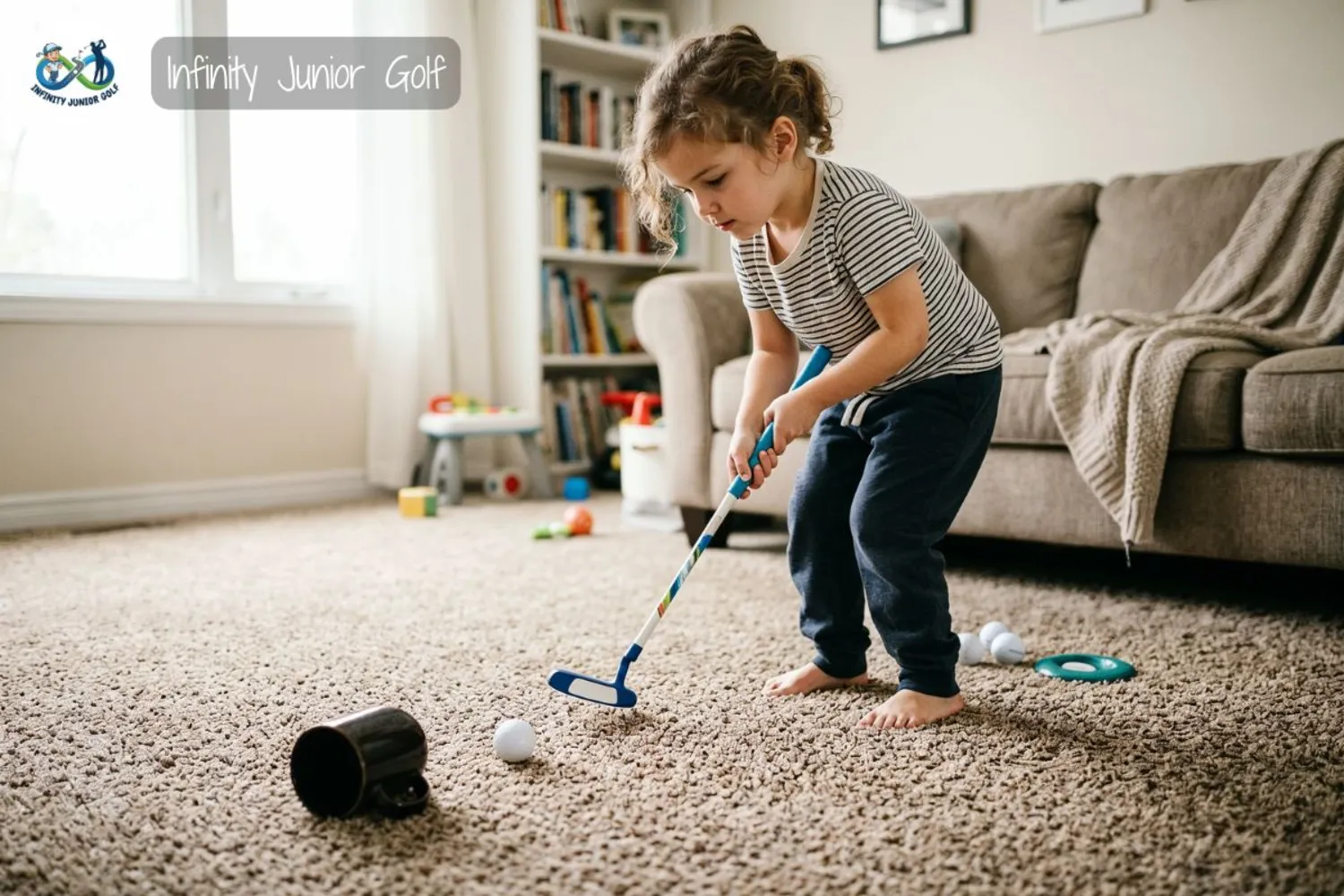
Free practice doesn’t require a range. Some of the most effective junior golf practice costs nothing. Putting on a carpet or a practice mat at home builds genuine feel. Chipping plastic balls in a backyard — or even foam balls in a hallway — develops short-game technique without a range membership. Alignment sticks (a few dollars online) are about as close to a universal drill tool as junior golf has, useful for everything from setup position to swing path. A child who spends 20 minutes a day putting across the living room carpet will arrive at their next round having genuinely improved, at zero cost.
Range memberships can be worth it, but aren’t essential. For a developing junior who is practicing consistently, a monthly range membership can represent good value. For a casual beginner, paying per bucket on the occasions you visit is almost always more economical. Don’t let the assumption that a range membership is required become another unnecessary cost line.
The combination of a Youth on Course membership, a municipal course with a junior rate, and some home practice covers the vast majority of what a beginner-to-intermediate junior golfer actually needs. Playing doesn’t have to be expensive — it takes a bit of research and a willingness to ask, but the affordable options are there.
Brands and Tools That Help Juniors Thrive — Our Recommendations
Finding the right place to buy junior golf equipment matters as much as knowing what to buy. These six retailers cover the full affordability spectrum — from new fitted sets with trade-up programs to used clubs at significant discounts — and each has a verified path to purchase.
U.S. Kids Golf
About
A specialist junior golf brand with a reputation for height-fitted, lightweight clubs and a genuine commitment to making the game accessible to young players. Their clubs run up to 30 percent lighter than adult equivalent clubs, which matters for swing mechanics, and the TradeUP program changes the long-term cost calculation meaningfully for families. The right starting point for most families new to junior golf.
Our Recommendation
The UL7 5 Club Stand Set (opens in a new tab) at $309.99 is the set I’d recommend for most families reading this article — complete enough to play a real round, fitted to the child’s height, and designed to hold trade-in value. Ships internationally via Worldwide Golf Shops.
GlobalGolf
About
One of the most established pre-owned golf retailers in the world, with a dedicated used junior clubs section that is genuinely stocked and updated regularly. Their UTrade-In and Certified Pre-Owned programs (including a 12-month warranty on CPO clubs) make the used-club route much less risky for families unfamiliar with buying second-hand equipment. Ships to over 40 countries.
Our Recommendation
For a family whose junior is trying golf for the first time and isn’t yet committed, used junior clubs (opens in a new tab) from GlobalGolf make a strong case — real brands, real fit, a fraction of new prices, and a warranty on certified stock.
Rock Bottom Golf
About
A discount and closeout retailer with a straightforward value proposition: name-brand golf equipment at reduced prices, often because it’s previous-season stock. Their junior club section carries sets from recognizable brands at prices that undercut standard retail. Worth checking when you know the size you need and want to move quickly at a lower price point.
Our Recommendation
Their junior clubs category (opens in a new tab) regularly lists complete sets at significantly below standard retail. Not every size is always in stock, so checking back if your first visit doesn’t show the right fit is worth doing. Ships internationally.
PGA TOUR Superstore
About
A full-service golf retailer with a genuine trade-in program: bring in used clubs and receive e-card credit toward new equipment, including junior gear. Their junior section carries current-season stock from major brands, and their 90-day Performance Guarantee means a set that doesn’t work out can be returned. For families upgrading from a beginner set to something more serious, the trade-in credit is a useful bridge.
Our Recommendation
The club trade-in program (opens in a new tab) is the most practical reason to visit PGA TOUR Superstore for a junior purchase — put the outgrown set toward the next one and reduce the net outlay. Ships to 100-plus countries via Borderfree.
Callaway
About
A globally trusted golf brand whose XJ junior line is designed specifically for young players at each stage of development. The Trade In/Trade Up program and Callaway Pre-Owned marketplace add a secondary-market dimension that improves the long-term cost picture. At $349.99 the XJ Level 1 set is on the higher end for a budget-focused list — but Callaway’s brand recognition and resale value are genuine advantages for families willing to pay a little more upfront for a set that holds its worth.
Our Recommendation
The XJ Level 1 4-piece set (opens in a new tab) suits a beginner junior who has shown commitment and whose family is comfortable trading a slightly higher entry price for stronger resale. Not the cheapest option on this list — that honesty is worth noting.
2nd Swing Golf
About
A specialist used and trade-in golf retailer with a reputation for strong trade-in values and a well-organized pre-owned inventory. Operates primarily in the US and Canada, with international shipping available via FedEx at cost. Worth comparing alongside GlobalGolf when searching for used junior clubs — two specialist resellers in the same search often produces a better deal.
Our Recommendation
Their used golf clubs (opens in a new tab) section is a useful second comparison point alongside GlobalGolf, particularly for US and Canadian families. International shipping is available but not subsidized — a factor for readers outside North America.
The retailers above cover the full range of how families approach junior golf equipment — new and fitted, pre-owned and discounted, trade-in and upgrade. Where you start depends on your child’s stage and your budget. The equipment doesn’t need to be perfect on day one; it just needs to fit the child in front of you today.
Free and Low-Cost Coaching, Programs, and Financial Help
First Tee is the most accessible free entry point. First Tee chapters operate across the United States and in a number of international locations, providing coaching, course access, and youth development programming at low or no cost to participants. The organizations model is explicitly built around removing financial barriers: PGA REACH grants fund course access, equipment, uniforms and PGA coaching at no cost to participants at chapters across the country. For a family whose child is interested in golf but whose budget doesn’t comfortably stretch to private lessons and green fees, First Tee is the right first call.
PGA Jr. League is worth understanding separately. PGA Jr. League is a team-format junior competition program designed to be fun and accessible for beginners. It runs through PGA professionals and is often priced well below individual lesson rates; some chapters offer it at no cost through grant funding. It’s worth contacting your local PGA section or chapter directly to understand what’s available in your area.
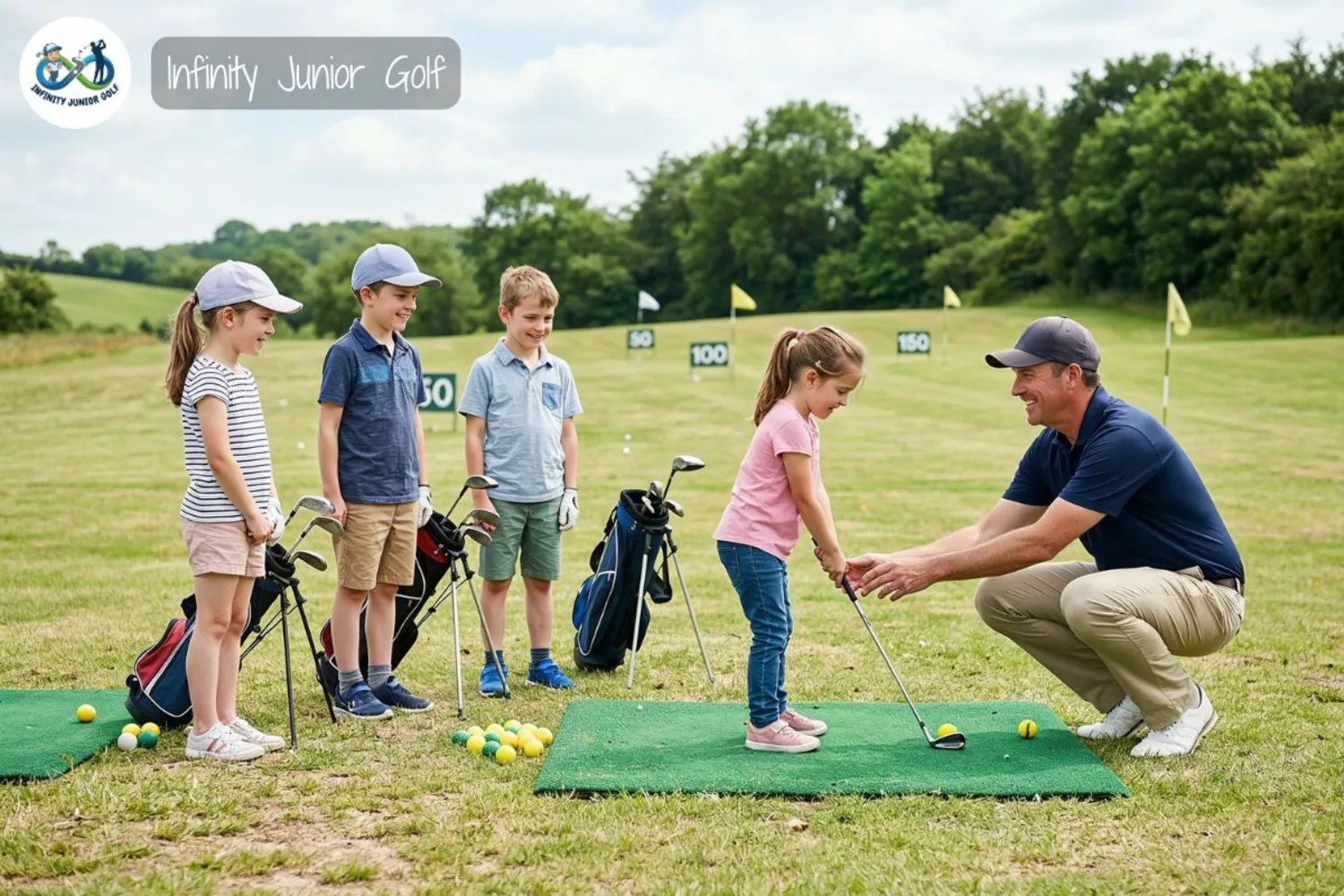
Group lessons outperform private lessons on a cost-per-improvement basis — for beginners. A beginner junior golfer does not need one-on-one instruction. The foundational skills of grip, setup, and basic swing mechanics are taught just as effectively in a group setting, and often more enjoyably, because the child is learning alongside peers. Private lessons make sense when a developing or competitive junior needs targeted technical work on a specific part of their game. For the first year or two, group lessons or a structured junior clinic are almost always the better value.
Parents can coach the basics. This is something the golf industry doesn’t say often enough: a parent who understands the basic setup, grip, and swing fundamentals can teach a young child to play golf competently. Free online resources from the PGA, USGA, and teaching professionals are plentiful. The fundamentals of junior golf are not complicated. If your child is six years old and just starting out, you don’t need to spend money on professional instruction to give them a solid beginning.
The financial-aid ladder starts here. For families with competitive juniors, structured financial support exists at multiple levels. The First Tee College Scholarship Program (opens in a new tab) offers need- and merit-based scholarships of up to $5,000 per year, renewable for up to four years, for participants who have stayed connected with the organization through their junior career. The AJGA Liberty National ACE Grant (opens in a new tab) provides financial aid for competitive juniors aged 12–18 — covering membership fees, tournament entries, travel support, and up to $750 in equipment reimbursement — and has disbursed millions of dollars to qualifying junior golfers. For a broader overview of how to find scholarships (opens in a new tab) across both golf-specific and general sources, the process is more accessible than most families realize.
A note for non-US families. Youth on Course covers the US, Canada, and Australia. First Tee, PGA Jr. League, and the AJGA grants are US-focused. If you’re outside these regions, the equivalent entry point is your national golf federation’s junior programs — England Golf, Golf Australia, Golf Canada, Golf Ireland, and similar bodies all run subsidized junior participation schemes. Contact the relevant federation directly to find out what’s available locally.
The coaching and financial support landscape for junior golf is broader and more generous than most parents realize. Before deciding that professional instruction or competitive play is out of reach, it’s worth spending an hour finding out what’s available in your area. The combination of a First Tee chapter, a Youth on Course membership, and a well-chosen used starter set puts golf within reach of almost any family that wants it.
Our Practical Tips For You
Here are ten practical ways to keep junior golf costs in check without cutting corners on the things that actually matter.
| Tip | How to implement | How it helps |
| Measure before you buy | Use a height-based sizing chart (Worldwide Golf Shops has a good free one) before ordering any junior clubs. | Eliminates the cost of buying clubs your child can’t swing effectively. |
| Buy one size up at the border | If your child is between two size brackets, choose the larger. A slightly long club is manageable; an outgrown one isn’t. | Extends the useful life of the set by six months to a year on average. |
| Join Youth on Course | Sign up at youthoncourse.org — annual fee is modest, financial assistance available. | Access to thousands of courses at $5 or less per round, plus a free lesson at participating retailers. |
| Use trade-up programs | Register U.S. Kids clubs at purchase to access TradeUP credit and the 6th Club Free benefit. | Reduces the net cost of each size upgrade; turns the first purchase into an ongoing credit cycle. |
| Start with the used-club market | Search pre-owned platforms (GlobalGolf, 2nd Swing) for your child’s current height bracket before buying new. | Cuts the cost of the first set by 40 to 60 percent — relevant while you’re confirming the child’s commitment. |
| Ask the pro shop directly | Call your local course and ask about junior discounts, twilight rates, and family deal structures — most aren’t advertised online. | Often unlocks 30 to 50 percent off standard green fees at courses that don’t promote junior pricing publicly. |
| Practice at home | Putting on carpet, chipping in the yard with plastic balls, and using alignment sticks for drills — all free. | Builds the short-game foundation that has the highest impact on scores, at zero ongoing cost. |
| Start with group lessons | Book a junior group clinic or structured group lesson rather than individual instruction for a beginner. | Delivers the same foundational content at a fraction of the per-hour cost of private tuition. |
| Check First Tee and PGA Jr. League locally | Contact your nearest First Tee chapter or PGA section to ask about free or subsidized programs in your area. | May provide free coaching, equipment, and course access — worth a single phone call to find out. |
| Research grant eligibility early | For competitive juniors aged 12 and over, check AJGA ACE Grant eligibility before committing to tournament budgets. | Membership, entry fees, travel, and equipment reimbursements are all covered for eligible families — potentially several thousand dollars. |
FAQs
Here are the questions I hear most often from parents who are new to junior golf and thinking about the cost.
How much does it really cost to start a child in junior golf?
For a genuine beginner playing recreationally with a parent, the realistic starting cost is a fitted junior starter set ($150–$310 new, less pre-owned), a Youth on Course membership for affordable green fees, and whatever a local municipal course charges for a junior round. You can get a child properly started for under $500 in total first-year spend — often considerably less.
Are cut-down adult clubs okay for a beginner junior?
Not really, and it’s not just a marketing position from junior golf brands. A cut-down adult club is heavier than a purpose-built junior club, stiffer in shaft flex, and usually the wrong length even after cutting — because the grip end and balance point change when you shorten a shaft. The result is a child who has to make compensations in their swing to manage the club, rather than learning to swing correctly. The compensations are harder to fix than the upfront cost difference.
Where can my child play golf affordably?
Youth on Course is the most consistent answer for families in the US, Canada, and Australia — $5 or less per round at thousands of participating courses. Outside those regions, check your national federation’s junior program pages, ask at local municipal courses about junior and twilight rates, and look for par-3 or short courses in your area as an economical starting point.
Is financial help available for junior golfers?
Yes, and more than most families realize. First Tee chapters provide equipment, course access, and coaching at low or no cost. The AJGA Liberty National ACE Grant covers tournament fees, travel, and equipment costs for competitive juniors aged 12–18. The First Tee College Scholarship Program provides up to $5,000 per year for qualifying participants. Calling your nearest First Tee chapter is almost always the right first step.
Does my junior need private lessons to improve?
Not at the beginner stage, no. Group junior clinics and structured junior programs delivered by PGA professionals teach the same foundational skills — grip, setup, alignment, basic swing — in a more enjoyable environment, typically at 30 to 50 percent of the private lesson rate. Private lessons become valuable when a junior is already playing regularly and has a specific technical area they need to improve. Start with group instruction and graduate to private tuition when the need is specific.
Our Related Articles

Best Junior Golf Club Sets For First-Time Players
Getting a young golfer started with the right equipment can be the difference between a lifelong passion for the sport and a set of clubs…
Read More (opens in a new tab)
How To Find Scholarships For Junior Golfers
Golf is one of the few sports where extraordinary talent can open the door to a fully funded college education — but for many families,…
Read More (opens in a new tab)
Top 5 Junior Golf Club Sets Reviewed
Picking a junior golf set feels simple until you actually stand in front of five options that all claim to be “the one.” Shaft flex,…
Read More (opens in a new tab)Conclusion
Junior golf affordability comes down to a handful of smart decisions made at the right moments: buy a fitted set from a brand with trade-up value rather than the cheapest thing on the shelf; use Youth on Course to cut green fees to almost nothing; lean on free practice and group instruction in the early stages; and find out what First Tee or your national federation offers before assuming professional coaching is out of reach. None of that requires cutting corners on the parts of junior golf that actually matter to a child’s development and enjoyment.
The families who find junior golf genuinely expensive are usually the ones who either bought equipment that didn’t fit, skipped the programs that would have reduced costs, or moved too quickly into competitive golf before the child’s commitment was clear. Avoid those three things and the cost picture looks very different.
What has been the biggest money-saving move you’ve made as a junior golf family — and is there anything you wish you’d known before spending the first dollar?
