

Golf can seem like a big, grown-up game when you first look at it, but kids usually learn it best when it feels playful, simple, and full of small wins. This article is here to make the first steps easier, so a child can enjoy golf without feeling overwhelmed — whether you’re in the United States, the United Kingdom, Australia, or anywhere else in the world.
I’m Al, and I’m just an everyday person who loves seeing kids discover junior golf in a way that feels light, encouraging, and genuinely fun. I have spent a lot of time around junior golfers, watching what works, what doesn’t, and what makes a child’s eyes light up the first time a ball rolls cleanly into a hole. I’m really glad you’re here, and I hope this guide helps you turn those first swings, putts, and smiles into something a young golfer wants to keep coming back to — so let’s get right into it.
⭐ Our Top Pick — Best Junior Golf Club Set
Callaway XJ Junior Level 2 Complete Set
I chose this set because it gives beginners a real junior-sized setup instead of asking them to fight clubs that feel too long or too heavy — and that single decision can make the earliest sessions dramatically more enjoyable.
It is built for juniors 47–53 inches tall and includes six clubs, headcovers, and a stand bag — a 7-piece setup that is exactly the kind of simple starter kit most families need to get going without overthinking the gear.
- ✅ Lightweight graphite shafts and titanium driver
- ✅ 7-piece complete set with stand bag | Approx. ages 5–8 (based on height range)
- ✅ Available globally through Callaway’s international storefronts
| Premium
👉 Shop the XJ2 Set
What Kids Really Need First
Keep it simple from day one: Beginner junior golfers do best when they start with properly sized, lightweight clubs rather than cut-down adult clubs, which are typically too heavy and too stiff for children still developing balance and rhythm. When the gear actually fits, kids can stand comfortably, move the club freely, and make cleaner contact without spending all their energy just trying to control the equipment. U.S. Kids Golf sizes every club in their range by player height rather than age alone, which is a far more accurate guide for families choosing a first set.
Start with just enough clubs: Golf doesn’t require a full bag on day one. A putter is widely regarded as the single best first club to place in a child’s hands — per PGA guidance — followed by a lofted training iron, and eventually a fairway wood or hybrid as the starter set grows. A small junior set usually helps more than a full bag because beginners do better when the choices stay simple and nothing feels overwhelming before they have even hit a ball.
⚙️ Recommended: Callaway XJ Junior Level 2 Complete Set
I like this pick specifically for brand-new beginners because a true junior-sized set removes one of the biggest early frustrations — clubs that feel awkward before a child has even had a chance to learn the basics.
- ✅ 6 clubs plus matching bag
- ✅ Built for juniors 47–53 inches tall
- ✅ Lightweight graphite shafts and titanium driver
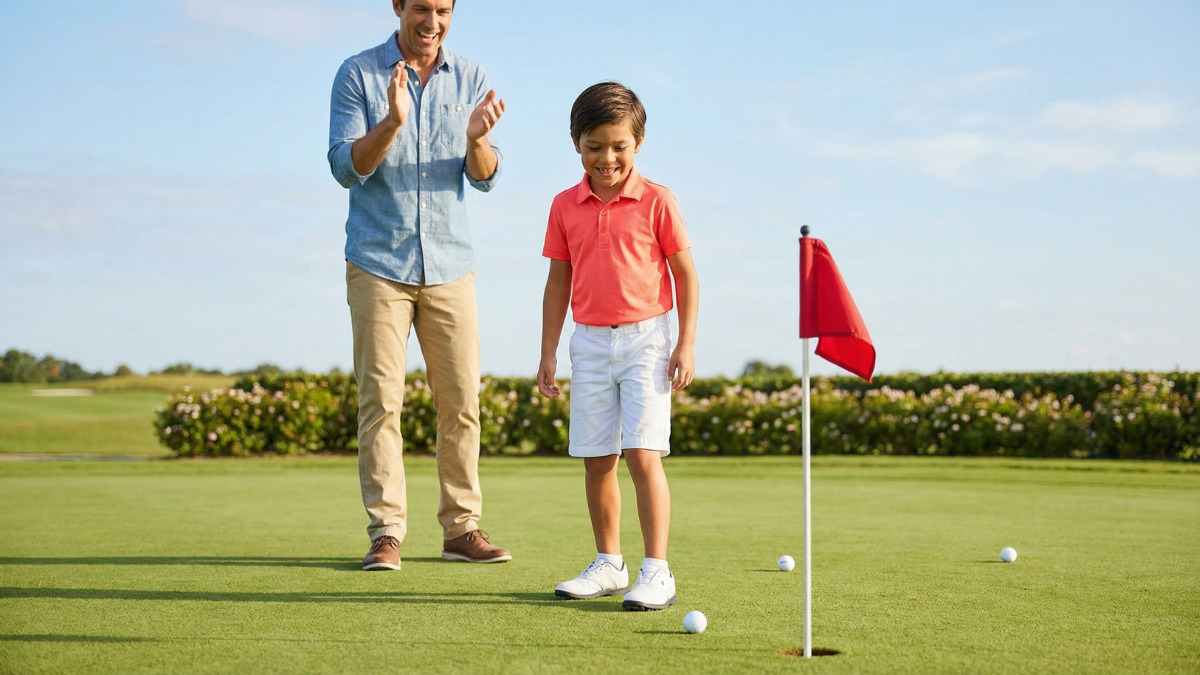
Begin on the green: Putting is often the best starting point for young beginners, and miniature golf is a genuinely smart first experience because kids can learn the basic stroke without worrying about big swings or distance. That means a child can start aiming, rolling the ball, and celebrating success within minutes rather than grinding through full-swing mechanics too early.
Teach the language casually: Simple golf terms like par, bogey, birdie, tee box, fairway, rough, and green help kids picture what is happening when they play. You don’t need a formal lesson for this — a few easy words mentioned during play can make the whole sport feel familiar and far less mysterious in a very short time.
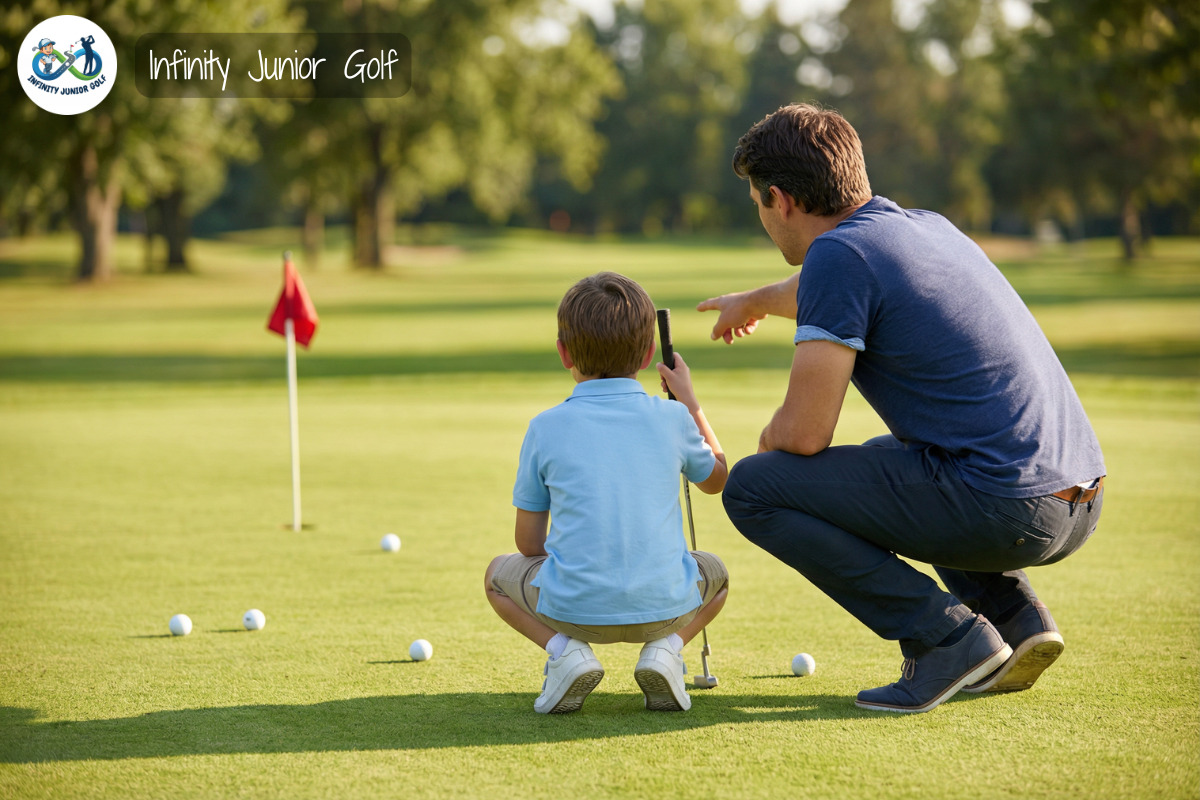
The good news is that once the equipment feels right and the first golf words make sense, the next step isn’t a complicated swing lesson. It’s teaching a few easy setup habits — grip, stance, and the swing itself — that help kids feel steady and successful right from the very start.
Teaching the First Golf Moves
Start with one easy grip cue: For most children, a clear visual cue works far better than a complicated explanation about hand position and pressure. One popular cue is the “hot dog in a bun” image — asking the child to picture their fingers wrapping around the grip like a bun around a hot dog — which keeps the hands together naturally and makes a correct grip feel intuitive rather than forced. First Tee, one of the world’s leading youth development organizations using golf as its platform, builds its early instruction around exactly these kinds of simple, memorable cues that stick with kids long after the lesson ends.
Build the stance from the ground up: Teaching kids to stand with their feet about shoulder-width apart and stay relaxed but balanced gives them a stable base before they ever swing hard. That kind of athletic stance helps young golfers feel confident and grounded rather than stiff and awkward, and it also makes it easier for them to return to the same setup again and again as muscle memory develops.
Keep the first swings small: Beginning with smaller motions — especially in chipping before moving to the full swing — allows kids to focus on making simple, satisfying contact rather than perfect mechanics. Encouraging a child to hold the finish and stay balanced at the end of each swing is a straightforward way to build control without overloading them with too many things to think about at once.
Tee the ball up early and often: Letting beginners hit teed-up balls, even with irons, helps them focus on the feeling of the ball getting airborne rather than struggling to pick it off the ground. That small adjustment can turn frustration into real satisfaction very quickly, which is exactly the fuel a new junior golfer needs to stay curious and come back for more.
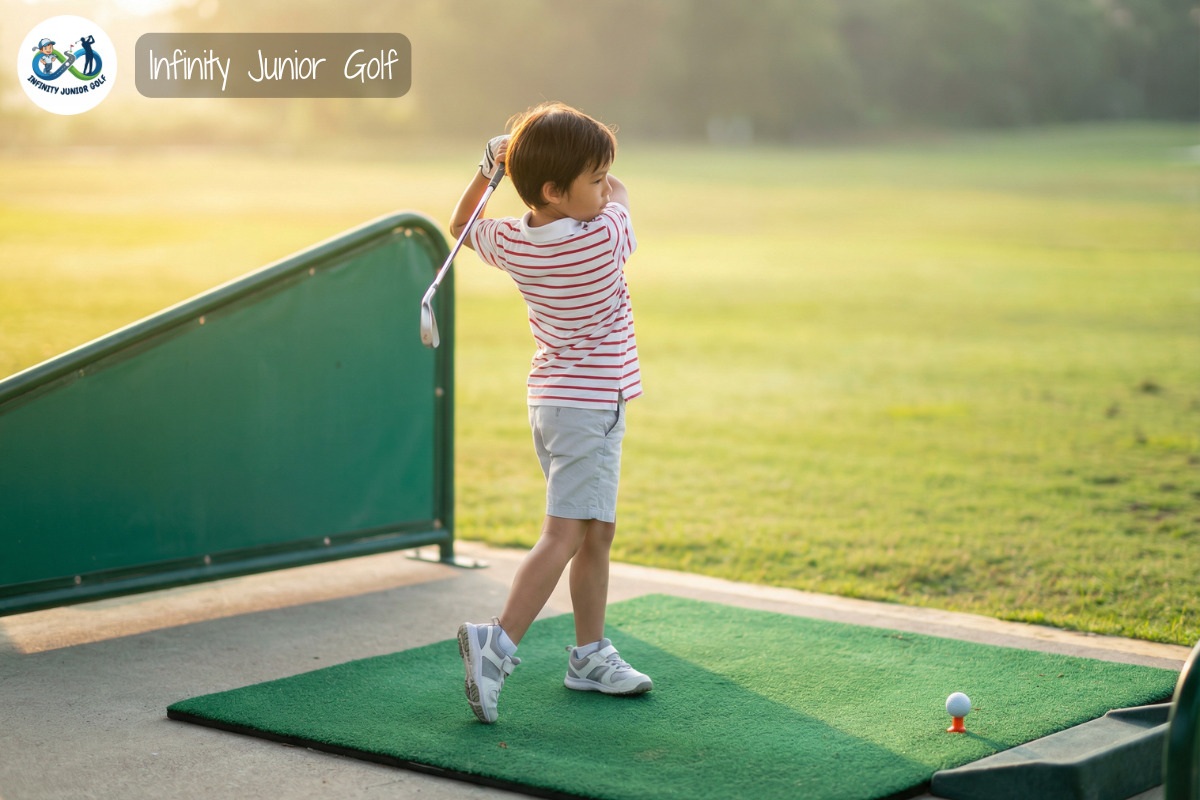
Once a child can grip the club, stand comfortably, and make a few satisfying swings, the game starts to feel real. That is the perfect moment to bring in safety and etiquette — not as a list of strict rules, but as a natural part of learning how golf works for everyone on and around the course.
Safety, Etiquette, and Confidence
Put safety first on every practice session: Safety is especially important on the driving range, and adults should give their full attention to the child during those sessions rather than using that time to work on their own game. When kids know an adult is truly watching, genuinely encouraging them, and keeping them clear of other players, they relax and learn considerably faster.
Make home practice safe and simple: Using plastic or foam balls in the yard avoids injuries and broken windows while making regular home practice much more accessible for busy families. That means a child can chip toward a bucket, a hula hoop, or a simple chalk circle on the driveway without needing a trip to a practice facility every single time.
Treat etiquette as part of the fun: Respecting other players, the course, and the traditions of the game — including staying quiet when someone is swinging and waiting calmly for their turn — is a lesson that fits naturally into play when it’s framed as “helping everyone enjoy the day.” Kids usually understand shared courtesy far better when it sounds like teamwork rather than a list of dos and don’ts.
Teach ready golf in plain language: The official Rules of Golf — jointly written by the USGA and The R&A, the two global governing bodies of the sport — emphasize that players should be ready to play when it is their turn and consider the pace of those around them — a concept that translates easily for kids as “be ready when it’s your turn.” That habit keeps rounds moving and helps young golfers learn that golf is more enjoyable for everyone when the whole group finds a good, natural rhythm together.
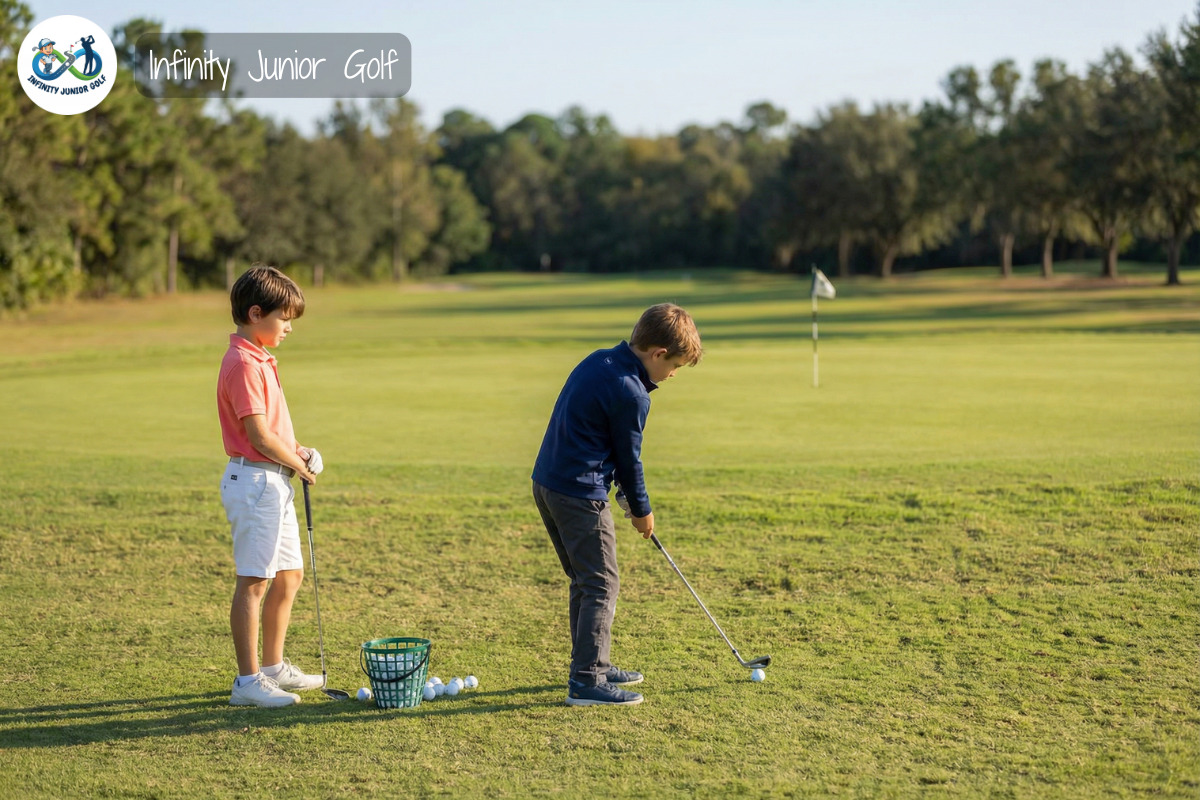
With safety and basic manners in place, families can stop worrying so much about getting everything perfect and start focusing on the most important ingredient of all — fun. And fun in golf almost always comes down to one thing: making practice feel like a game, which is exactly what the next section is all about.
Making Practice Feel Like Play
Use games instead of drills: Putting contests, closest-to-the-hole challenges, and skill-based tasks make techniques far easier for kids to remember and genuinely enjoyable to repeat. When a child is trying to beat their own best distance or land a chip inside a hula hoop, they are building real skills without it ever feeling like homework.
Keep sessions short enough to end on a win: Young children often do best with sessions around 30 to 45 minutes, with time split across putting, chipping, and the range. Short sessions work because kids leave wanting more rather than feeling worn out, and that consistent feeling of wanting one more turn is usually a much better foundation for long-term enthusiasm than grinding through long lessons.
End every session with something positive: Finishing with a fun challenge, a favorite snack, or a simple moment of celebration helps a child connect golf with quality time and encouragement rather than pressure. That small routine can make a meaningful difference over weeks and months, because positive associations with golf practice are exactly what keep kids showing up and improving without being pushed.
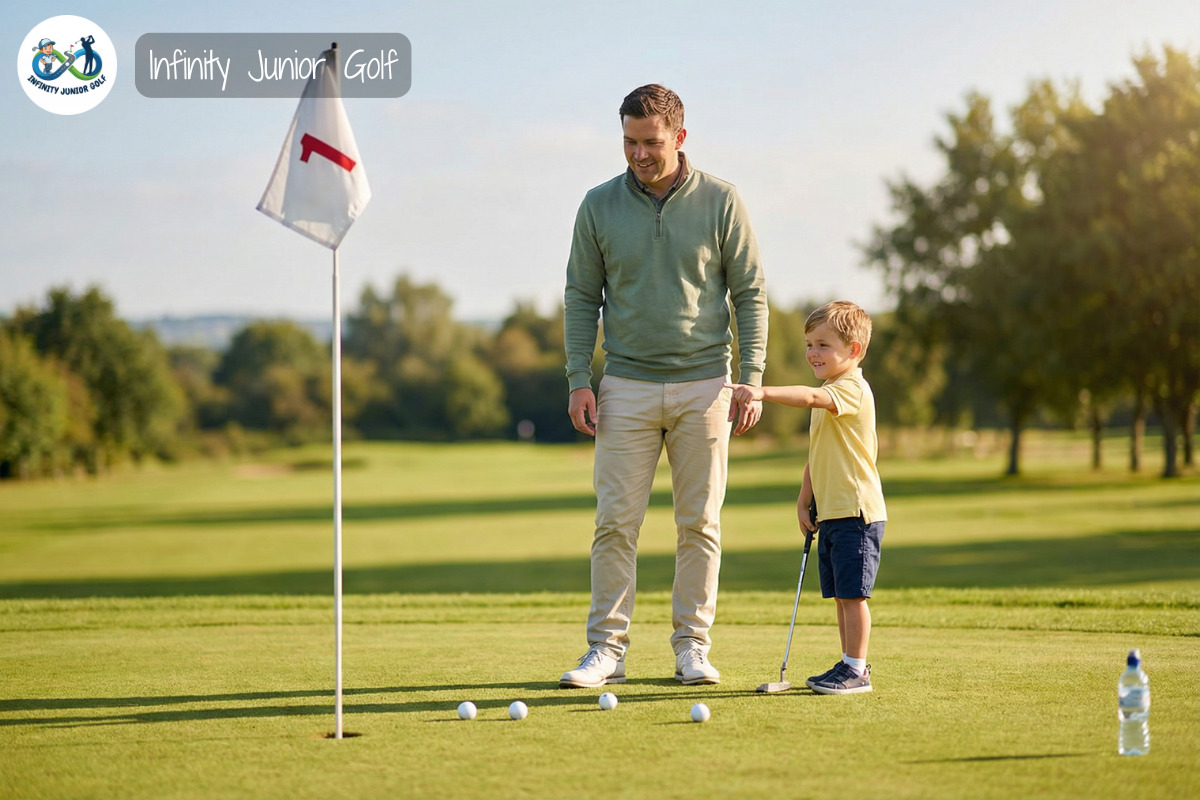
When practice consistently feels like play, kids build genuine confidence without even noticing all the learning happening underneath. That naturally leads to the question of which equipment and tools actually support those games and early fundamentals — so let’s walk through the best retailers and products for families getting started anywhere in the world.
Brands and Tools That Help Juniors Thrive — Our Recommendations
Getting the right equipment doesn’t need to be complicated or expensive, but it does make a real difference to how quickly a child falls in love with the game. The six retailers below were chosen specifically because they offer products that match what this article is about: correctly sized starter clubs, training aids that make the fun games described above easy to run at home or on the range, and accessible options for families at every budget level and in every region.
Our Retailer Recommendations
Callaway Golf
Callaway’s XJ Junior Club Sets are purpose-built for young beginners, with lightweight graphite shafts, age-appropriate lofts, and a matching bag included. This is the brand behind the top pick featured in this article, and it is the first place I point parents to when a child needs properly fitted clubs that remove the guesswork from day one.
U.S. Kids Golf
U.S. Kids Golf builds their entire product range around junior players, with Ultralight 7 club sets sized by height from 39 to 66 inches and engineered specifically for slower junior swing speeds. They also offer junior alignment tools and practice accessories scaled to fit a child’s bag — ideal for running the aim and targeting games described in this article at home or on the range.
Golf Training Aids
Golf Training Aids carries a dedicated junior training aids collection stocked with swing trainers, putting aids, and short game training aids — the exact tools that turn the ten games in this article into proper structured practice sessions. Everything in their junior range is scaled to fit the physical proportions of younger players, making it easy for parents to find products that support developing swings and build strong fundamentals right from the start.
WhyGolf
WhyGolf designs and sells golf training aids built around clear, immediate feedback — including the Alignment Discs and Pressure Plate that help beginners develop consistent setup habits and weight shift from their very first sessions. Their tools are beginner-friendly and backed by a 99-day money-back guarantee, which takes the risk out of buying training aids for a child who is just discovering the game.
GlobalGolf
GlobalGolf is a strong option for families who want quality junior clubs without paying full retail, thanks to their junior golf section featuring certified pre-owned gear and a UTrade-In® program covering all the major brands — with options for both boys and girls. It is one of the most practical first stops for parents who want to equip their child properly before fully committing to the sport, and their PGA-professional-powered USelect® tool helps match shoppers to the right clubs even within the pre-owned range.
American Golf
Europe’s largest golf retailer, American Golf stocks a comprehensive range of junior golf clubs and starter sets from PING, TaylorMade, Cobra Golf, Titleist, and more — covering all ages, heights, and skill levels. With more than 80 stores across the UK and Ireland as well as a full online store, it is the most natural first stop for UK and European families who want the option to compare and size up junior clubs in person before buying.
The main idea here is not to buy everything at once. Choose one or two things that make the very next step more enjoyable, and build from there as your child’s interest and confidence grow. Once the right gear is in place, the focus can shift completely to what really drives long-term improvement — which is helping kids get better without ever feeling like they are under pressure to perform.
Helping Kids Improve Without Pressure
Let progress stay age-appropriate: Improvement doesn’t need to happen quickly to be meaningful, and sessions that are short, simple, and adjusted to a child’s actual age and interest level will always outperform sessions that push hard for fast results. A child who genuinely looks forward to coming back next week is almost always on a better long-term path than one who is technically improving faster but quietly losing the joy that brought them to the game in the first place.
Use the course in small pieces: Early on, children can ride along for a few holes, take an occasional shot, and simply soak in the experience before they attempt full holes. When they do begin playing real holes, starting from a forward tee close to the green — no farther than about 100 yards — lets kids complete holes quickly, celebrate success, and build a genuine sense of accomplishment on an actual golf course without feeling dwarfed by it.
Praise effort more than score: Kids tend to stay engaged and return more willingly when the adults around them notice and celebrate balance, bravery, patience, and focus — not just whether every shot goes straight or every putt drops. Noticing the process rather than obsessing over the outcome is one of the most powerful things a parent or coach can do to keep a young golfer happy, curious, and motivated over the long run.
Wait for scorekeeping to feel natural: Score can be introduced once a child shows genuine interest in tracking how they are doing, and using a simple, age-appropriate par target keeps the whole experience encouraging rather than deflating. That approach lets kids understand how the game is structured without making them feel behind before they have truly had time to enjoy it.
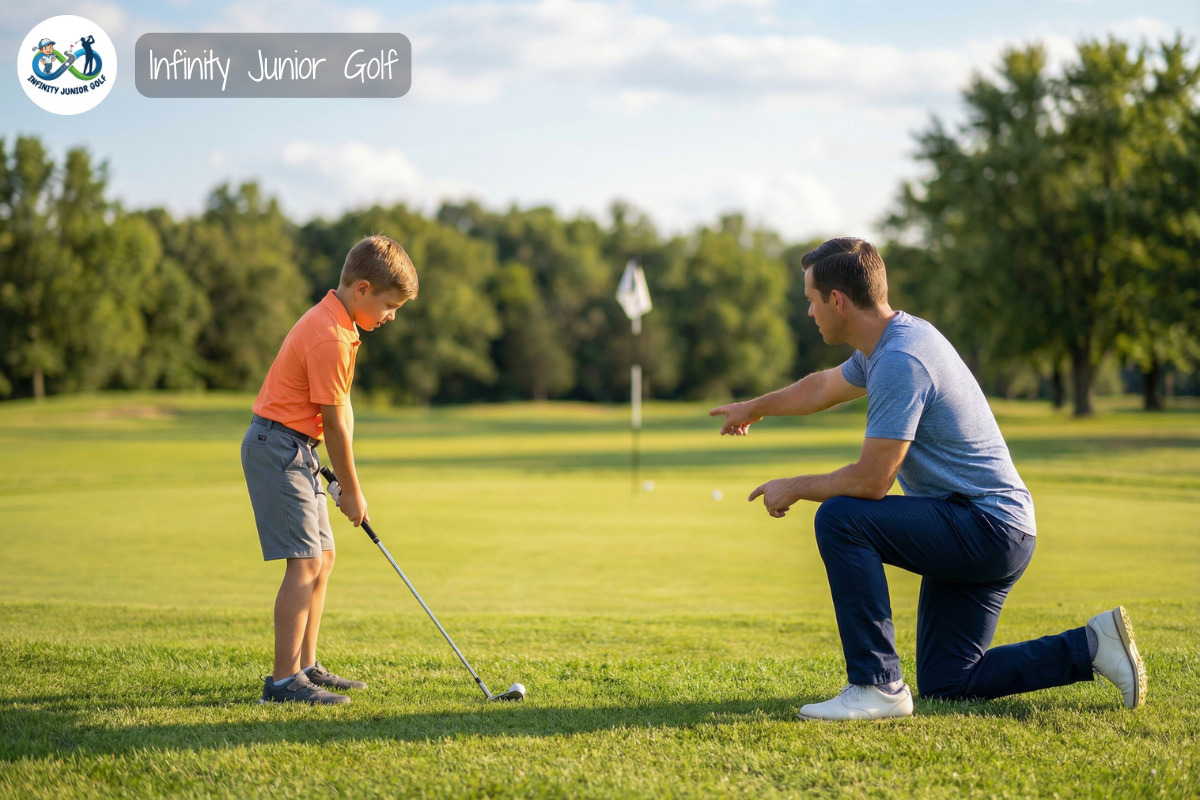
With the right mindset around improvement, everything else starts to fall into place — the technique, the etiquette, and the love of the game. Now here’s the part that most kids will enjoy the most: ten genuinely fun games you can play right away to bring every one of these fundamentals to life.
Our Practical Tips For You
10 Fun Games to Play
Here are ten simple, enjoyable golf games you can play with kids to teach the basics while keeping the whole experience genuinely fun. Each one covers a real skill — putting, chipping, aim, balance, or course awareness — in a way that feels far more like play than practice.
| Game | How to Play It | What It Teaches |
|---|---|---|
| Closest to the Pin | Take turns chipping or pitching toward a flag or target cone. The player whose ball lands and stays closest wins the round. Play three rounds and tally the wins. | Teaches distance control, aim, and the feel of a chip or pitch shot — all while creating natural, healthy competition between parent and child. |
| Putt the Bucket | Place an empty bucket on the practice green or in the yard and take turns rolling a ball into it from increasing distances. Start at two feet and step back after each success. | Builds putting stroke consistency and teaches kids to read distance intuitively, without any technical instruction required. |
| Beat the Pro | Invent a fictional “pro” player and assign them a score, like three putts. The child tries to beat the pro’s score on each hole. Adjust the pro’s score to stay achievable as the child improves. | Introduces the concept of score without pressure, giving kids a fun rival to chase rather than comparing themselves to each other or to adults. |
| Traffic Light Chipping | Set three targets at different distances — one close, one medium, one far. Call out a distance and the child chips to that target. Mix up the calls quickly to keep them moving and thinking. | Teaches kids to adjust power and trajectory for different distances, a foundational short-game skill wrapped inside a fast-moving reaction game. |
| Hula Hoop Putting | Lay a hula hoop flat on the green and challenge the child to putt into it from various angles. Move the hoop farther away each time they succeed. | Develops aim, feel, and awareness of putting line in a visual, low-pressure way that kids find far more engaging than a traditional putting drill. |
| The Tee Tower Challenge | Stand three tees upright in a line, six inches apart. The child uses a club to gently knock each tee down one at a time in order, from a short distance. | Teaches club face control and precision at very short range — a surprisingly effective way to build a consistent, squared-up impact habit. |
| Foam Ball Scoring | Set up three targets in the yard — a bucket, a hula hoop, and a chalk circle — and give each a point value. Take turns chipping foam balls and keep score over ten shots each. | Introduces basic scoring, encourages chipping technique, and makes home practice competitive and fun without any risk of damage or injury. |
| The Fairway Race | Mark a narrow corridor on the range or in the yard with two cones or towels about ten feet apart. Each player gets five balls and scores a point for every ball that lands between them. | Teaches ball-flight control and directional accuracy in a clear, visual format — and makes straight shots feel rewarding rather than accidental. |
| One Club Challenge | Each player chooses just one club for a short hole or back-and-forth chipping game. The challenge is figuring out how to use that single club for every shot needed. | Develops creativity, feel, and shot-making instincts that serve junior golfers well for life, while keeping the gear simple and the focus sharp. |
| Shadow Finish | After each swing, the child must freeze and hold their finish until they count to three. Award a point for every balanced, held finish that stays steady to the count. | Reinforces a balanced follow-through in a fun, physically engaging way, and gently corrects one of the most common early swing issues without a single critical word. |
These games work best when they stay flexible — change the rules, combine two of them, or let the child invent a new variation. The moment a child starts adapting a game to their own ideas, you know it has genuinely clicked. That said, a few quick questions tend to come up every time families first start this journey, so let’s answer the most common ones before we wrap up.
FAQs
What age can kids start learning golf?
Kids can start in playful, low-key ways at a very young age, with many programs and coaches suggesting that structured fun begins to work well around age five or six. Younger children can still enjoy putting games, foam ball challenges, and short chip shots without any formal structure at all.
Do kids need a full set of clubs right away?
No — a putter and one or two other clubs are plenty to begin. A proper junior set makes the most sense once a child is clearly enthusiastic and ready to play more complete holes on a real course.
How long should a beginner practice session be?
Around 30 to 45 minutes is a solid target for most young beginners, with time split across putting, chipping, and a few full swings. Short sessions that end on a positive note almost always produce better results than long sessions that wind down in fatigue or frustration.
Should kids keep score from the very first round?
Not necessarily. Score works best when a child shows genuine interest in tracking their progress, and using a simple, age-appropriate par target keeps it encouraging rather than discouraging.
Our Related Articles
How To Build A Balanced Schedule For Junior Golfers
For any family with a junior golfer in the house, the weekly juggle is very real. School homework sits on one side of the table,…
Read More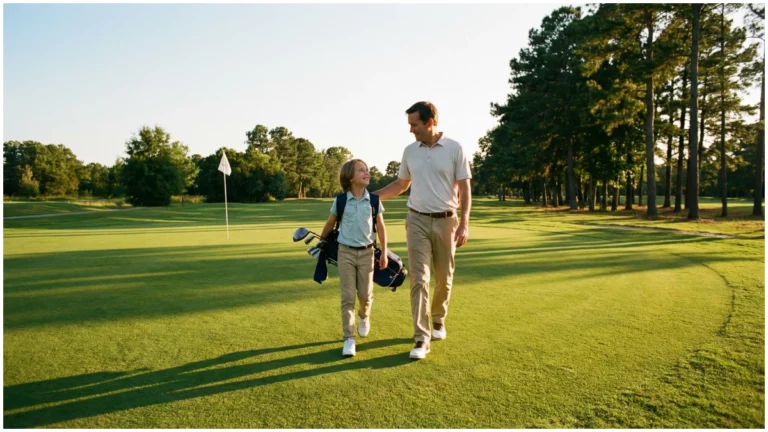
Best Junior Golf Club Sets For First-Time Players
Getting a young golfer started with the right equipment can be the difference between a lifelong passion for the sport and a set of clubs…
Read More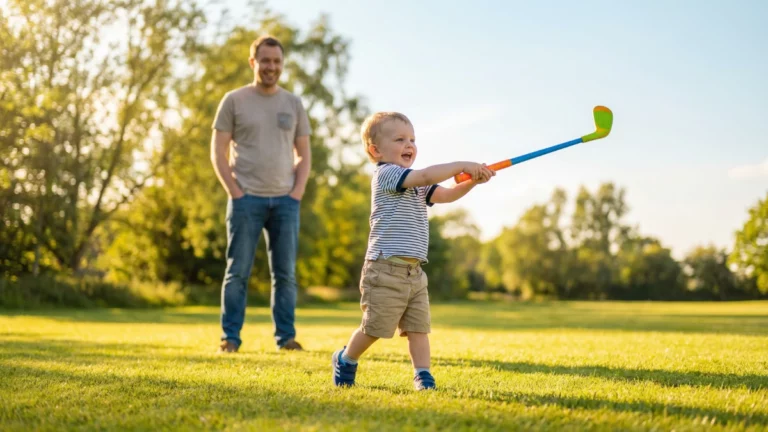
How To Teach Toddlers To Swing A Golf Club
There’s something genuinely magical about watching a toddler grip a golf club for the very first time. Those tiny hands wrap around the shaft, that…
Read MoreConclusion
Teaching golf to kids works best when the game is broken into small, happy steps: clubs that fit, short shots first, simple cues, safe practice, and plenty of encouragement at every turn. The ten games in this article are designed to make each one of those steps feel fun rather than like hard work, because at this age, the real goal isn’t perfection — it’s a child who wants to pick up a club again tomorrow.
Pick one game from the list and try it this week. You might be surprised how quickly a child who seemed uninterested in golf becomes very focused on beating you at closest to the pin. What games have worked best for the young golfer in your life, or which of these ten are you most looking forward to trying first? Share your thoughts in the comments below — we’d love to hear what’s working for your family.