

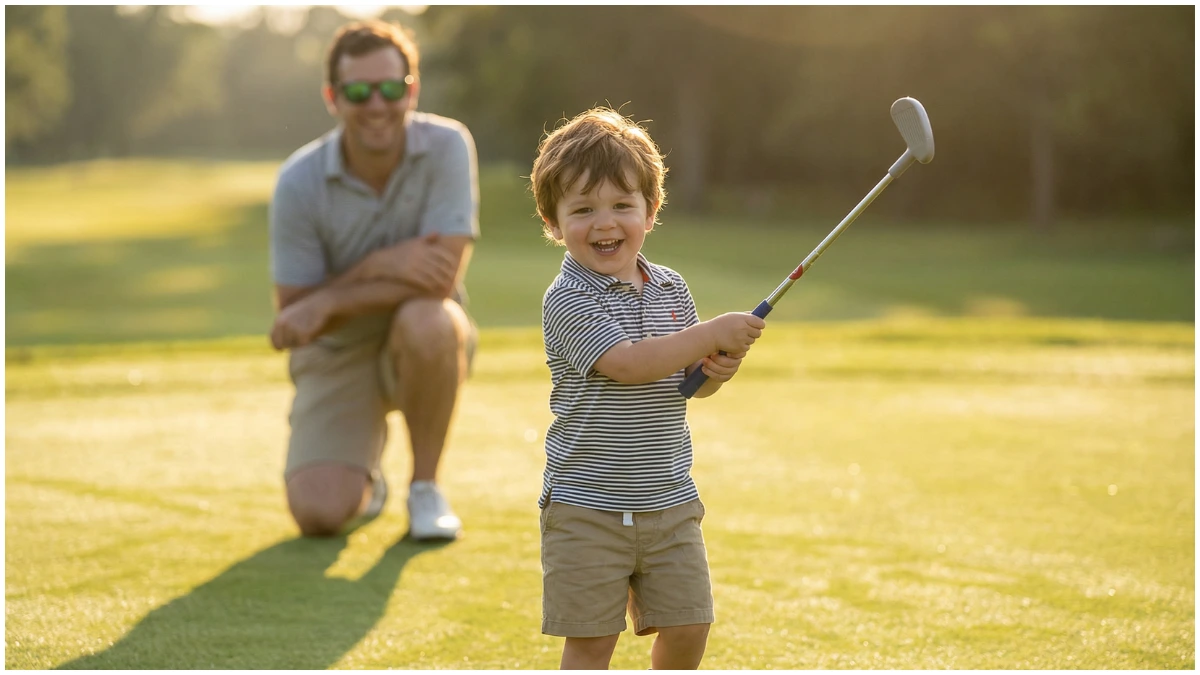

Watching a toddler take their first swing at a golf ball is one of those magical moments that parents treasure forever. Those early attempts might look more like enthusiastic baseball swings or wild helicopter moves, but somewhere in that joyful chaos lies the beginning of what could become a lifelong love for the game. Teaching toddlers to swing a golf club is less about creating perfect mechanics and more about sparking curiosity, building coordination, and making every moment on the grass feel like playtime.
I’m Al, and I’ve spent countless afternoons at parks, backyards, and putting greens watching little ones discover the thrill of making contact with a golf ball. As someone deeply passionate about junior golf, I’ve learned that the secret to getting toddlers hooked on this wonderful sport is surprisingly simple: keep it fun, keep it short, and celebrate every wobbly attempt like it’s a hole-in-one. Whether your toddler is just learning to walk steadily or already running circles around you, there’s a place for them in golf. Let me walk you through how to turn those first swings into the foundation for years of enjoyment on the course.
Understanding Your Toddler’s Developmental Stage
Physical readiness comes first: Before handing your toddler a club, look for signs they’re physically prepared. Can they walk steadily without frequent tumbles? Do they have basic balance when standing on one foot, even for just a few seconds? These fundamental movement skills are the building blocks for a golf swing. Toddlers between ages two and four are typically in the active start phase, where their bodies are learning to coordinate big movements like swinging, throwing, and balancing.
Hand-eye coordination matters: The ability to track a ball with their eyes and coordinate their hands to make contact develops gradually in toddlers. You’ll notice this when they can successfully catch a balloon or rolled-up sock, or when they can stack blocks with some precision. These same skills transfer directly to golf, where timing the club to meet the ball requires that crucial eye-hand connection. Don’t worry if they miss the ball ten times in a row at first—this is completely normal and part of the learning process.
Attention spans are naturally short: At ages two to four, expecting your toddler to practice for more than 5-10 minutes is setting everyone up for frustration. Their brains are wired for brief bursts of activity followed by exploration or rest. This means your “golf lesson” might last the length of a few swings before they’re distracted by a butterfly or want to investigate that interesting leaf. That’s not failure—that’s being a toddler, and working with these natural rhythms makes the experience enjoyable for everyone.
Interest trumps age every time: Some toddlers show genuine excitement when they see golf clubs or watch you practice, while others couldn’t care less. The most important readiness sign is genuine interest. Does your child ask to come with you to practice? Do their eyes light up when they see a golf ball? Do they try to mimic your swing movements? These enthusiasm indicators matter far more than hitting a specific age milestone. Starting when they’re genuinely curious means you’re building on natural motivation rather than forcing an activity they’re not ready for.
Simple instructions work best: Toddlers can follow one or two-step instructions, but complex technical guidance goes right over their heads. Instead of explaining swing plane or weight transfer, focus on simple concepts they can grasp: “Hit the ball,” “Keep your eyes on it,” or “Swing and follow through.” Breaking things down to their developmental level keeps frustration low and understanding high.
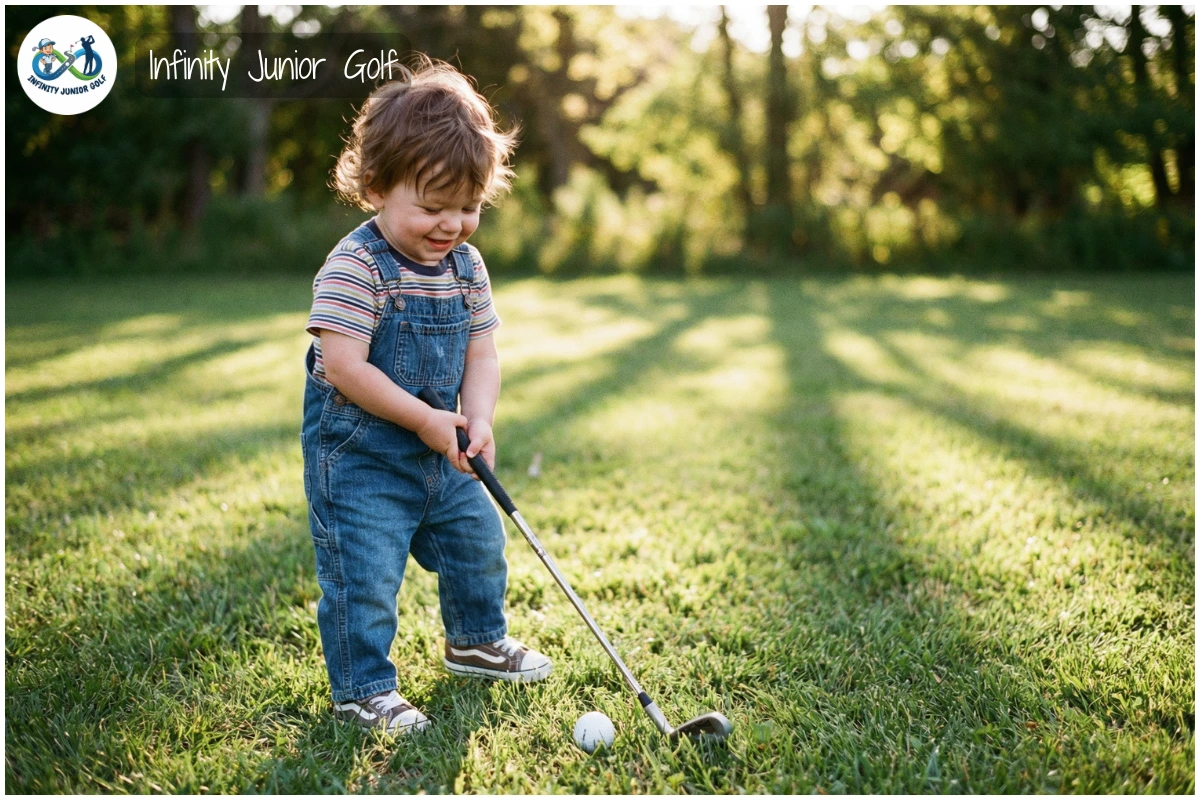
Getting this developmental understanding right sets the foundation for everything else. When you match your approach to where your toddler actually is—not where you wish they were—you create space for natural learning and genuine enjoyment to flourish. With this foundational understanding in place, let’s move on to ensuring they have the right equipment for their size and stage.
Choosing the Right Equipment for Little Hands
Size and weight are non-negotiable: Adult clubs are far too long, heavy, and stiff for toddlers, making contact with the ball nearly impossible and potentially causing injury to growing bodies. Toddler-specific clubs designed for ages two to four typically measure between 30 to 38 inches tall and feature lightweight graphite shafts that tiny arms can actually control. The difference in weight is dramatic—a properly fitted junior club might weigh less than half a pound, while an adult club can exceed a pound. That extra weight is exhausting for little muscles and leads to frustration quickly.
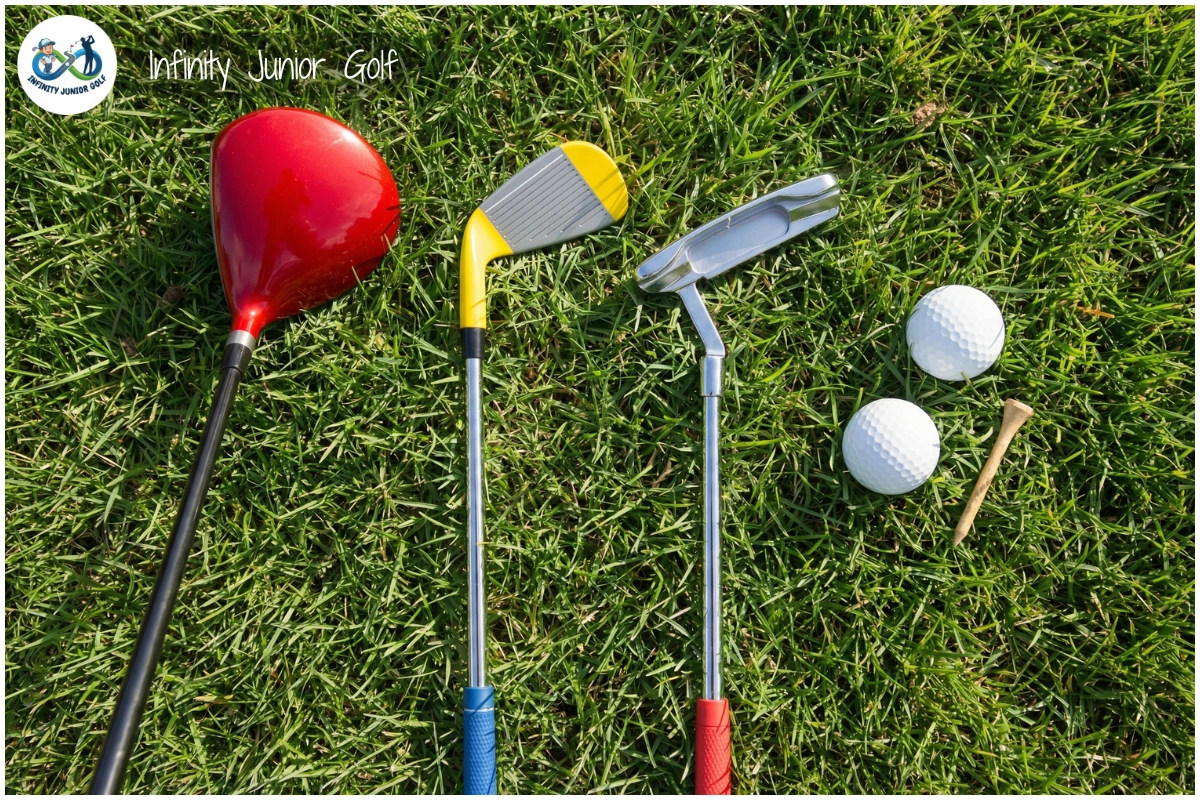
Start with a three-club set: Your toddler doesn’t need a full bag of fourteen clubs. In fact, they’ll do better with just three: a high-lofted fairway wood or driver for longer shots, a mid-iron (typically a 7-iron) for approach practice, and a putter for those satisfying moments on the green. This simplified setup lets them focus on learning basic swing mechanics without the confusion of choosing between clubs. As they grow and their skills develop, you can add individual clubs to round out their collection.
Grip size makes a huge difference: Adult grips are too thick for toddler hands to wrap around properly, preventing them from developing the correct hold on the club. Junior clubs come with thinner grips specifically designed for smaller fingers. When your toddler holds the club, you should see their fingers comfortably wrapping around the grip without straining or having to stretch their hand too wide.
Plastic clubs have their place: While serious junior clubs with metal heads are ideal for toddlers ready for actual practice, plastic clubs serve a valuable purpose for the youngest explorers ages 18 months to three years. These lightweight options let very young children safely experiment with the motion of swinging without risk of injury to themselves or others. Think of these as training wheels—useful for building familiarity before transitioning to real equipment when they show sustained interest.
Proper club length testing is simple: Stand your toddler upright with their arms relaxed at their sides. A properly fitted club should allow them to grip down about 1 to 1½ inches from the top of the grip, giving them room to grow into the clubs while maintaining proper form. If the club is too tall, they’ll struggle with control and likely develop compensation patterns in their swing. Too short, and they’ll have to hunch over uncomfortably. Many junior golf retailers offer sizing charts based on height, making it easy to match your child to the right equipment.
Investing in properly fitted equipment from the start might seem like an unnecessary expense when they’re so small, but it’s genuinely one of the best things you can do for their development. When the clubs fit correctly, success comes more naturally, and success breeds enthusiasm for continuing to practice. Now that you have the right equipment, creating a safe environment where they can swing freely becomes the next priority.
Creating a Fun and Safe Learning Environment
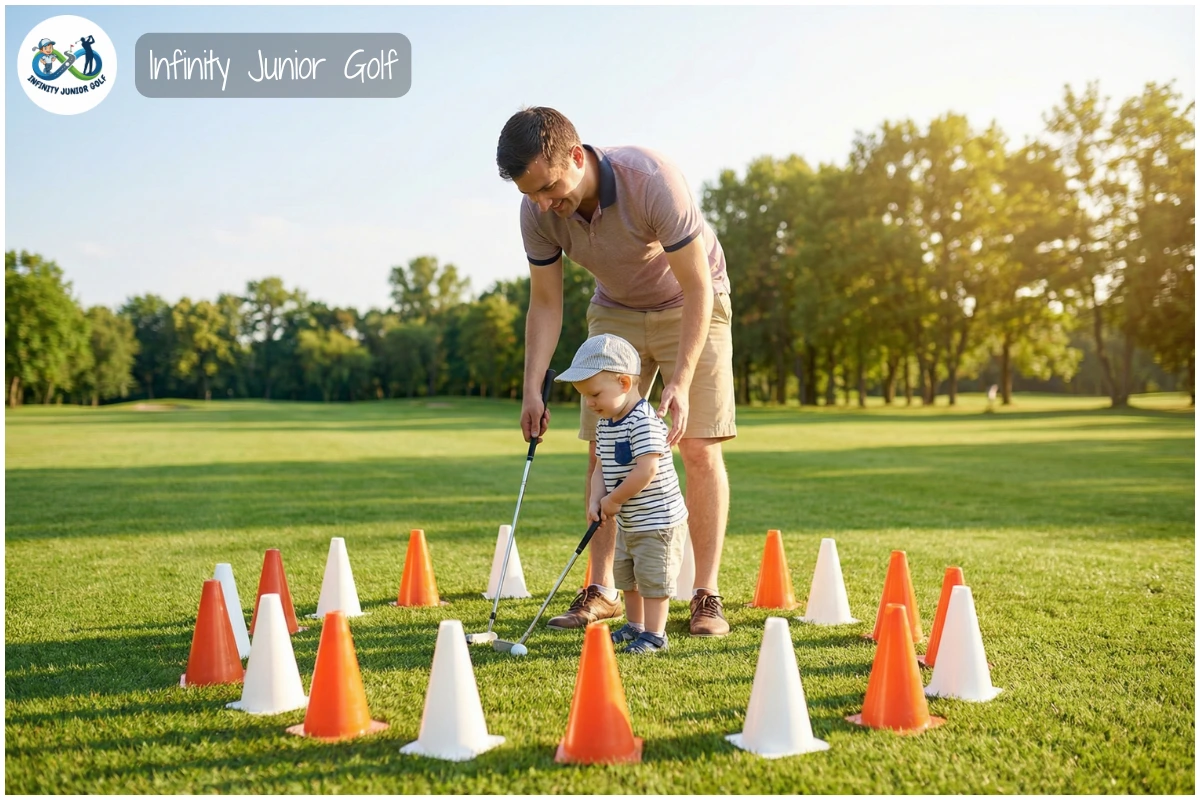
Designate a clear practice space: Whether you’re in your backyard, at a park, or on a practice facility, establish clear boundaries for where swinging happens. Use cones, ropes, or simply explain to your toddler, “We only swing in this area.” This creates a mental boundary that helps them understand where it’s safe to take their club back and follow through. The space should be free of obstacles, toys, pets, or anything else that might distract or create hazards.
The three-meter safety rule is essential: Before any swinging begins, teach your toddler to look around and make sure nobody is within at least three meters clearance (about ten feet) of where they’re standing. This becomes a habit they’ll carry throughout their golf life. Make it a game: “Let’s check our safety circle! Can you point to where people need to stay?” Young children respond well to visual and interactive safety checks rather than just verbal warnings.
Teach the stop-and-look routine: Every single time before taking a swing, practice stopping and looking around. This deliberate pause becomes an automatic safety check and also helps toddlers slow down and focus on what they’re about to do. You can make this fun by creating a little routine: “Stop, look left, look right, look behind—safe! Now we can swing!”
Proper club carrying matters early: Show your toddler how to carry their club correctly—head pointing down toward the ground, grip up near their shoulder or under their arm. When they’re walking with a club, it should never be swung around like a toy sword. Practicing this from the very beginning installs good habits that become second nature over time.
Warm-up movements prevent injuries: Even toddlers benefit from a warm-up before activity. Make it playful: do some arm circles together, twist your torsos back and forth like you’re trying to see what’s behind you, or swing imaginary clubs in slow motion. These movements prepare their little bodies for the dynamic action of swinging and reduce the chance of pulling muscles.
Supervision is always necessary: Never leave a toddler unsupervised with golf clubs, even for a moment. Their understanding of safety is still developing, and what seems obvious to adults—don’t swing near someone’s head—might not occur to them in the moment. Your constant presence isn’t just about preventing accidents; it’s also about being there to celebrate their successes and encourage them through challenges.
Creating this safe, structured environment doesn’t take away from the fun—it actually enhances it. When toddlers feel secure and understand the boundaries, they can relax and focus on the joy of hitting that ball without worry or confusion. With safety established and the fundamentals understood, let’s explore where you can find the specialized equipment your toddler needs to get started properly.
Our Retailer Recommendations
When you’re ready to get your toddler set up with proper equipment, choosing the right retailer makes all the difference. These trusted companies specialize in quality junior golf gear designed specifically for young beginners, with many offering international shipping to serve families worldwide.
U.S. Kids Golf
The world leader in junior golf equipment, specializing exclusively in kids’ clubs. Their Ultralight series features toddler-specific clubs fitted by height with ultra-lightweight graphite shafts for ages 2–5 and up. For the very youngest players, the infant clubs range provides “Baby’s First Club” putters designed specifically for infants and toddlers. Available through their direct websites serving the United States, Australia, and United Kingdom markets.
GlobalGolf
Comprehensive selection of junior golf clubs including U.S. Kids Golf, Callaway, TaylorMade, and Ping equipment. Offers both new and certified pre-owned clubs at various price points. Ships to over 100 countries including Australia, UK, Europe, Asia, and South America with duties paid at checkout for faster delivery.
Callaway Golf
Premium manufacturer of junior golf sets including their XJ series designed for young players. The XJ-2 and XT sets include age-appropriate clubs with lightweight construction. Available through their regional websites serving North America, Australia, and Europe, plus authorized retailers globally.
Worldwide Golf Shops
Extensive inventory of junior golf clubs from top brands including U.S. Kids Golf, Tour X, Callaway, and TaylorMade. Features complete sets and individual clubs for toddlers and young children. Offers international shipping via FedEx to Canada, Mexico, and many countries worldwide with 7-10 day delivery.
Rock Bottom Golf
Wide selection of junior golf equipment and training aids at competitive prices. Ships to over 80 countries internationally including UK, Europe, Australia, Asia, and South America. Offers 48-hour processing on international orders with discounts on orders over $99.
Golf Training Aids
Specialized retailer offering junior-specific training aids including putting mats, alignment tools, swing trainers, and practice equipment designed for ages 4+. Perfect for supplementing toddler practice at home. Ships throughout North America with international inquiries welcomed.
With your toddler outfitted in properly sized equipment from these trusted retailers, you’re ready to dive into the actual teaching process where the real fun begins and they start developing their swing through playful activities.
Teaching the Basic Swing Through Play
The putting green is your best friend: Contrary to what you might think, the ideal starting point isn’t the driving range—it’s the putting green. Putting teaches toddlers everything fundamental about golf in one simple action: place the ball down, pick up a club, use it to make the ball move toward a target. This stripped-down version eliminates the complexity of a full swing while building the core concept of the game. Set up fun targets like plastic cups or stuffed animals, and let them experiment with rolling the ball to knock them over or get close to them.
Start with motion before contact: Before worrying about actually hitting a golf ball, let your toddler practice the feeling of swinging. Have them make practice swings without a ball, feeling the club move back and through. You can even practice swinging at pine cones, dandelions, or autumn leaves to help them understand the sensation of swinging through something. This removes the pressure of “good” or “bad” contact and lets them explore movement freely.
The grip can stay simple: While adult golfers debate the merits of overlapping versus interlocking grips, toddlers do best with the ten-finger baseball grip where all fingers rest on the club similar to holding a bat. This is the most natural and comfortable for small hands that lack the strength and dexterity for more complex grips. Don’t stress about perfecting their grip—comfort and control matter far more at this stage. As they grow and develop, more refined grip techniques can be introduced.
Keep the stance basic and comfortable: Position your toddler with their feet about shoulder-width apart, knees slightly bent, and weight balanced evenly. Their back should be relatively straight with just a slight lean forward from the hips. This athletic position should feel natural and stable—if they look uncomfortable or off-balance, adjust until they can stand easily without wobbling. Remember, they’re still mastering basic balance, so perfect form takes a backseat to stability.
Turn practice into games constantly: Transform every aspect of learning into play. Create a tic-tac-toe grid on the putting green with chalk or tees and see who can land their ball in different squares. Set up hula hoops or buckets at various distances as targets for chipping practice. Make an obstacle course with cones they have to navigate the ball around. Build a mini golf course in your backyard using household items. When practice feels playful, toddlers stay engaged longer and learn more effectively.
Demonstrate rather than over-explain: Toddlers learn through observation and mimicry far better than through verbal instruction. Show them what you want by doing it yourself, then let them copy you. Keep your demonstrations exaggerated and simple—slow, dramatic backswings followed by smooth forward swings. Make it theatrical: “Watch how I take the club back…back…back…and then SWOOSH forward!” They’ll naturally try to imitate what they see.
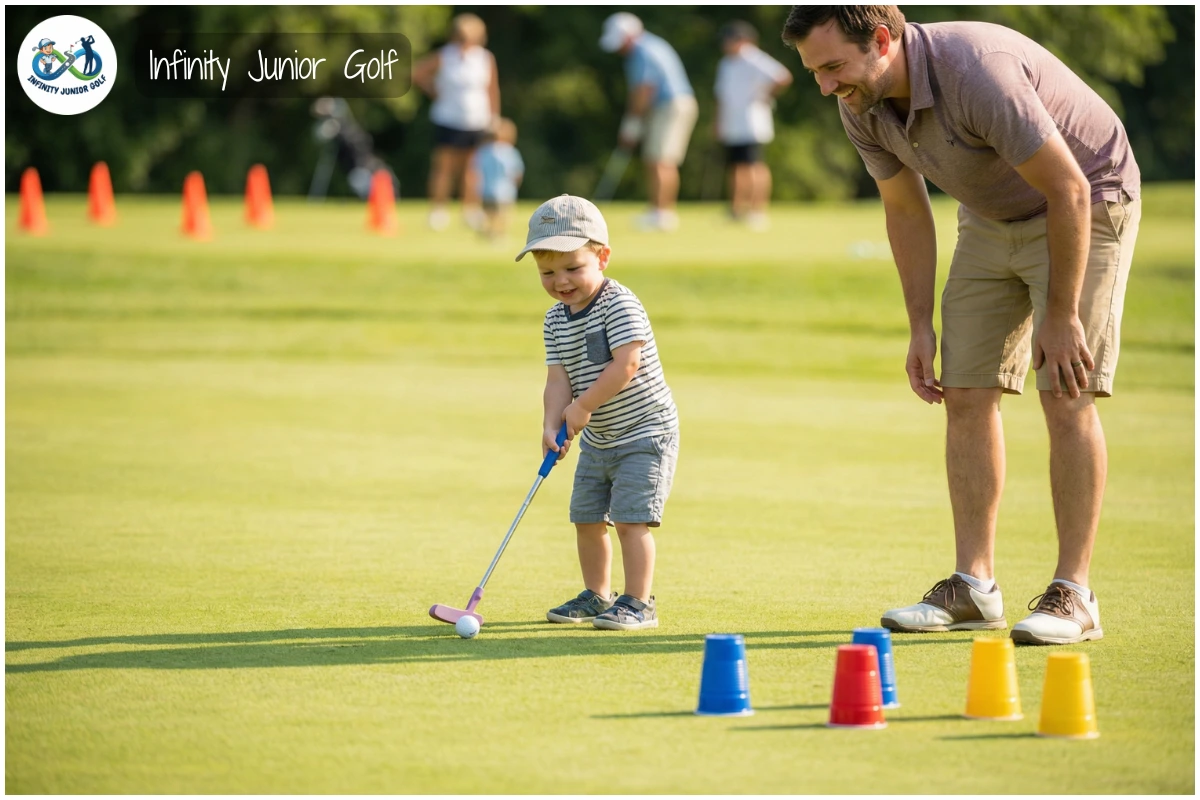
The beauty of teaching through play is that learning happens almost accidentally. Your toddler isn’t thinking about mechanics or technique—they’re just having fun trying to knock over that purple cup or see how close they can get to the stuffed dinosaur. Meanwhile, their brain is building neural pathways for coordination, timing, and spatial awareness that form the foundation of a proper golf swing. To help you translate this playful approach into everyday actions, here are some practical tips you can start using immediately.
Practical Daily Tips You Can Action Today
| Tip | How to Implement | How It Helps |
|---|---|---|
| Practice in tiny bursts | Keep sessions to 5-10 minutes maximum, stopping before they get bored or tired. | Matches toddler attention spans and prevents burnout while building positive associations with golf. |
| Celebrate every attempt | Cheer enthusiastically for every swing, regardless of whether they make contact with the ball. | Builds confidence and creates positive reinforcement that encourages them to keep trying. |
| Use real targets | Set up plastic bottles, stuffed animals, or buckets as visible goals for their shots. | Gives toddlers concrete objectives they can understand rather than abstract concepts. |
| Hit from tees always | Place every ball on a tee, even when practicing irons, to make contact easier to achieve. | Increases success rate dramatically and helps them experience the satisfaction of solid contact. |
| Practice at home | Keep a plastic club and foam balls indoors for impromptu practice whenever interest strikes. | Makes golf accessible in the moment they’re excited about it, reinforcing their natural enthusiasm. |
| Let them pick the club | Allow your toddler to choose which club they want to use, even if it’s “wrong” for the shot. | Gives them autonomy and ownership of their practice, increasing engagement. |
| Model patience yourself | Show calm reactions to your own mistakes and maintain an upbeat attitude regardless of results. | Toddlers mirror adult behavior; your composure teaches them how to handle frustration. |
| Make it social | Invite other families with young children to practice together occasionally. | Transforms golf into a fun social activity and provides peer modeling and motivation. |
| Keep clubs visible | Leave their golf bag in an accessible spot where they can see it and grab it when interested. | Visual reminders spark spontaneous interest and practice opportunities. |
| End on a high note | Always finish practice with a successful shot or fun game, never when they’re frustrated. | Creates positive last impressions that make them eager to return next time. |
These practical tips convert theory into daily action, giving you specific ways to nurture your toddler’s budding interest in golf without overwhelming either of you. As you implement these strategies, you’ll likely encounter some common questions—let’s address those now.
Frequently Asked Questions
How often should my toddler practice golf?
One to two times per week is perfect for toddlers just starting out, with sessions lasting only 5-10 minutes. Quality and enthusiasm matter far more than quantity at this age. Watch for signs they’re eager to practice rather than sticking to a rigid schedule.
What if my toddler gets frustrated and wants to quit?
Let them stop immediately without pressure or disappointment from you. Frustration is a sign they’re done for the day. Return to it another time when they’re fresh and interested. Forcing continued practice when they’re upset damages their relationship with the game.
Do I need to teach my toddler proper golf rules and etiquette right away?
Not at all—etiquette education typically begins around age 10 when children can better grasp social concepts. For toddlers, focus entirely on safety basics (looking before swinging, not swinging near others) and simple respect for equipment. Rules about play order, scoring, and course behavior come much later.
Can my toddler use my old clubs if we cut them down?
While it might seem economical, cut-down adult clubs remain too heavy and lack proper balance for toddlers even when shortened. Invest in properly designed junior clubs that are lightweight and correctly proportioned. The difference in their ability to swing successfully is dramatic and worth the investment.
Our Related Articles

Why Goal Setting Matters For Young Golfers
Goal setting transforms how young golfers approach the game, turning aimless practice sessions into purposeful development opportunities. When junior players establish clear targets, they create…
Read More
Top 5 Junior Golf Club Sets Reviewed
Choosing the right golf clubs can make or break a young player’s journey in this wonderful sport. When junior golfers have equipment that matches their…
Read MoreConclusion
Teaching your toddler to swing a golf club is ultimately about planting seeds for a lifetime of enjoyment rather than cultivating the perfect swing mechanics. When you prioritize fun over form, celebrate wobbly attempts alongside successful strikes, and match your expectations to their developmental reality, you create space for genuine love of the game to grow. Remember that every professional golfer started exactly where your toddler is now—swinging enthusiastically, missing frequently, and discovering the simple joy of making a ball move toward a target.
The journey you’re beginning isn’t about creating the next tournament champion, though that’s certainly possible down the road. It’s about giving your child access to a sport that teaches patience, builds confidence, promotes physical activity, and provides opportunities for precious shared experiences with you. Those early practice sessions in your backyard or at the local putting green aren’t simply about golf—they’re about connection, encouragement, and showing your toddler that trying new things, even when they’re challenging, can be incredibly enjoyable.
What’s been your biggest surprise or challenge in introducing your toddler to golf? Share your experiences in the comments below—we’d love to hear what’s worked for your family and answer any questions you have about your little one’s golf journey!